

Wondering whether your Ford car key needs replacing? Visible damage, unreliable buttons, a key-recognition warning and resistance in a lock are reasons to arrange an assessment. They do not all mean the same repair is needed. A weak remote battery, damaged case or vehicle fault may explain the symptoms, so check the cause before buying a complete replacement.
The fifth reason to act is practical: having only one working key leaves you without a tested backup. That is a reason to consider a spare, rather than proof that the existing key is faulty. This guide explains five signs to notice, safe checks you can make and what to tell a provider so the next step fits your Ford.
Sign 1: the Ford car key has visible physical damage
Look for a bent or cracked blade, a split case, a loose hinge or buttons that have broken through the surface. Stop forcing a key that resists turning. Damage can make normal use unreliable, and a blade breaking inside a lock creates a different repair problem. Keep any loose parts together and explain what happened before the damage appeared.
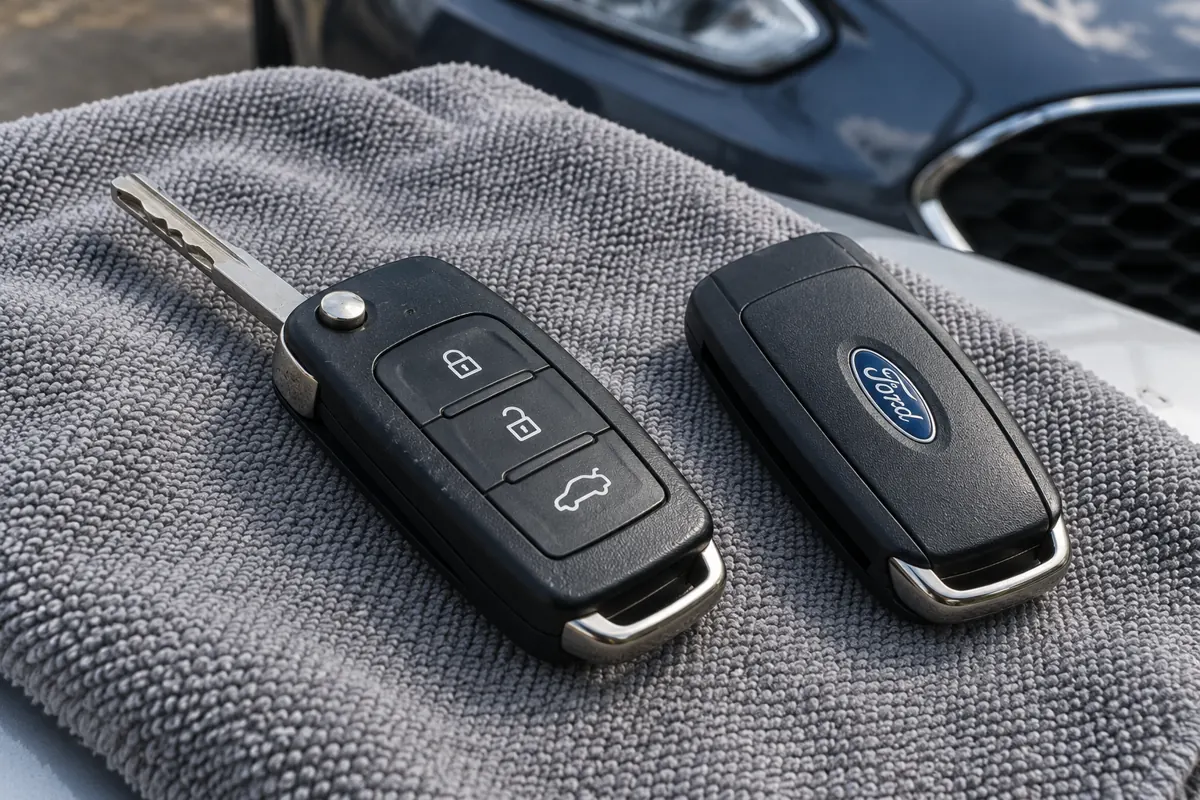
A damaged shell does not always mean every internal component has failed. Where suitable electronics can be retained, a provider may suggest a case or button repair. If the blade, board or other parts are affected, the supported solution may be different. Ask what will be retained and what will be replaced rather than accepting a new-looking shell as evidence that the complete key is new.
Do not pull the circuit board out of your only working Ford car key to inspect it. Small parts can be lost or damaged, and a case change can become more involved than expected. Avoid glue inside the key, makeshift screws or bending a blade back with pliers. Tell the provider if an earlier repair has already been attempted.
If the key was dropped or exposed to water, describe that event even if it still works sometimes. Intermittent operation can be difficult to reproduce during a short appointment. A record of the incident and the affected functions helps the provider decide whether testing, repair or Ford key replacement should be considered.
Sign 2: the Ford remote works only intermittently
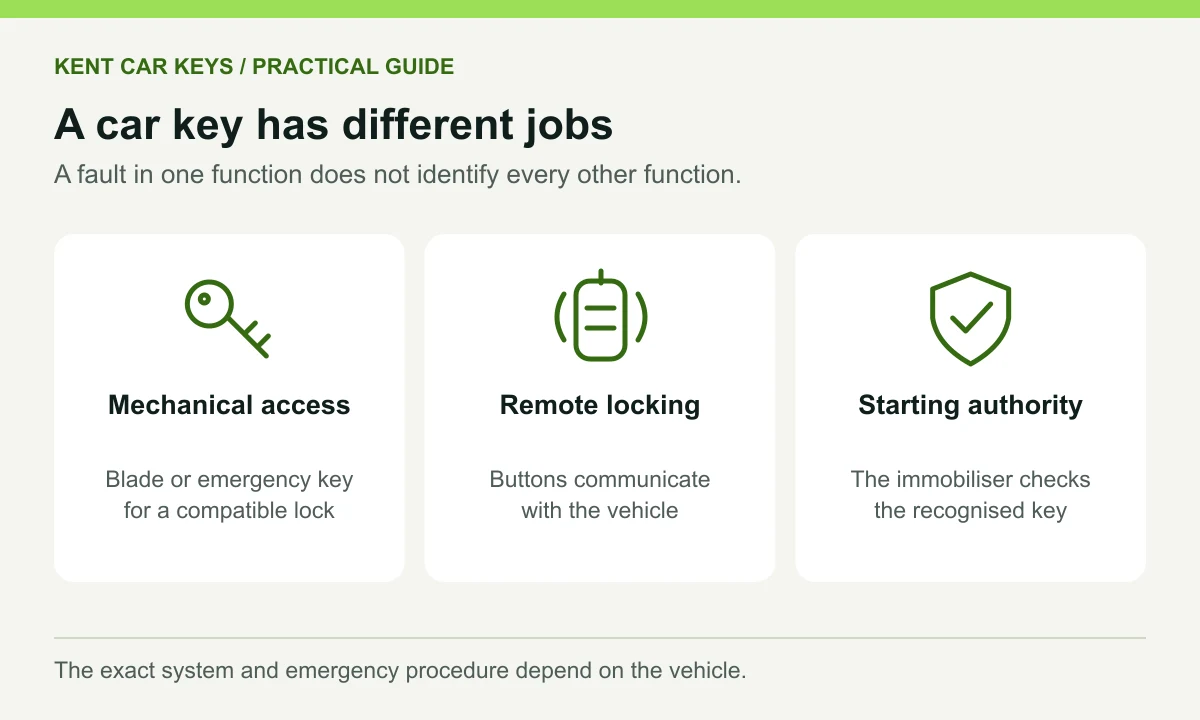
A remote that needs repeated presses, works only very close to the car or fails on one button deserves attention. First identify the function: does unlocking fail, does locking fail, or do both behave inconsistently? Note whether the indicators respond and whether the car actually locks. Do not assume the vehicle is secured just because you pressed the button.
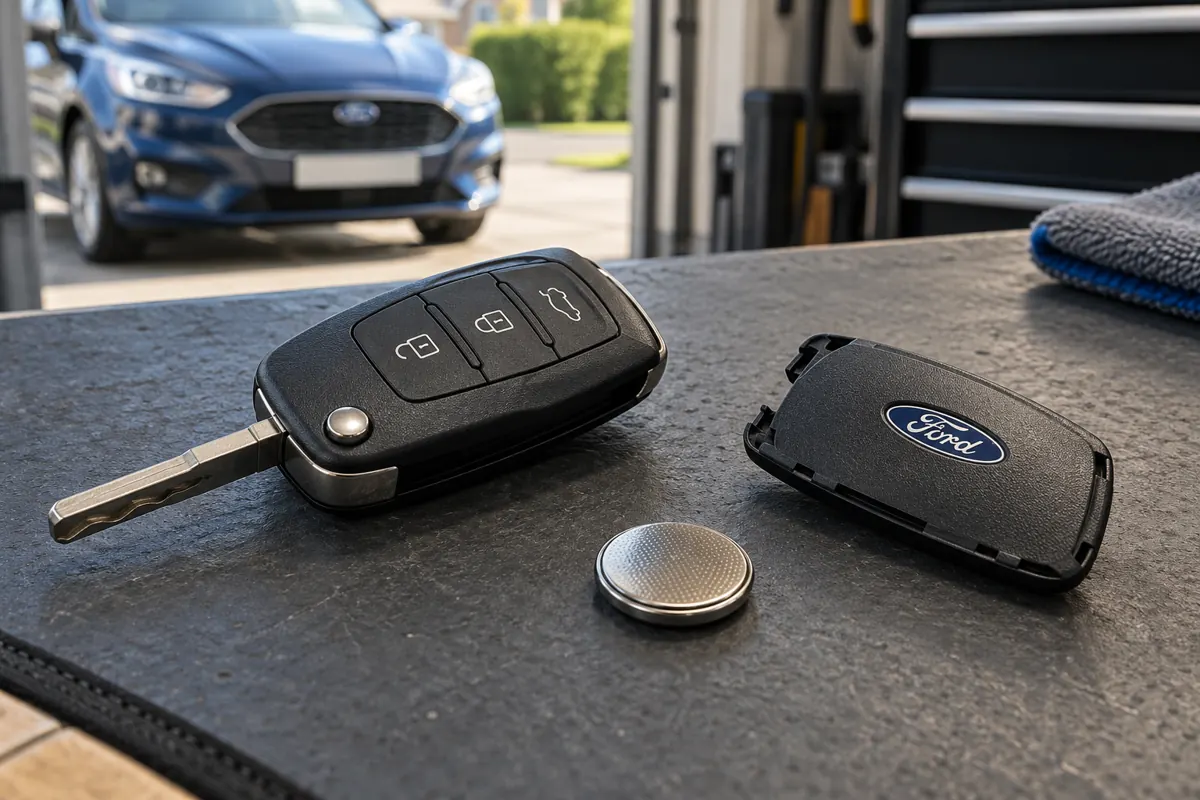
A fob battery can be one explanation, but it is not the only one. Follow the exact handbook for the specified cell and opening method. Some key designs need a particular sequence or additional care. Do not assume every Ford fob takes the same battery, and do not force a case that does not open as shown in the relevant instructions.
Compare with a known working spare under the same conditions if one is available. Keep the keys apart so you know which remote the car is responding to. If the spare works consistently, report the difference. If both have the same problem, the vehicle or local conditions may need consideration as well as the keys.
A Ford remote fault is different from engine authorisation. A key may still start the car when its remote buttons fail. Explain that distinction when asking for help. Our car key and fob repair information can help you frame an enquiry about an existing key rather than assuming a complete replacement is required.
Sign 3: a key-recognition or immobiliser warning appears
Write down the exact dashboard message and when it appears. A warning while trying to start the car is more useful to a technician than a description such as “the key light came on”. Take a photograph only when safely parked, and note whether the vehicle starts, whether it starts with another key and whether the warning clears.
A warning does not prove that your Ford car key needs replacing. Key detection can depend on the key, vehicle power supply, equipment and circumstances. Use the handbook instructions for your exact vehicle, including any supported backup detection position. A location shown for another Ford is not automatically correct for yours.
Do not begin a sequence of online resets or disconnect the car battery without vehicle-specific guidance. That can introduce new variables and make the original symptom harder to assess. If the car is stranded or other electrical systems behave abnormally, tell the provider before arranging what you believe is a simple key appointment.
For an explanation of electronic authorisation, read our Ford car key programming guide. Battery replacement, remote synchronisation and authorising a new transponder are different tasks. Diagnosis should establish which one, if any, is needed for the symptoms you observed.
Sign 4: the key is difficult to turn or starting is unreliable
If a mechanical key sticks, needs unusual pressure or does not turn smoothly, stop forcing it. The blade and lock both need consideration. A worn or damaged key is one possibility, but a lock problem or another mechanical issue may require attention. Repeatedly wiggling the key until it works is not a reliable long-term repair.
Tell the provider whether the problem is in the door, ignition or both. Explain whether another key turns more easily and whether resistance started suddenly or developed gradually. These details help distinguish an affected Ford car key from a shared lock problem. Do not put unapproved lubricants, tools or fragments of material into the lock while experimenting.
Separate a key that cannot turn from a car that cranks but does not start. They are different symptoms and may need different expertise. A normal-looking key is not proof that the starting system is healthy; equally, an engine fault is not proof that the key has lost programming. Report what happens without trying to name the failed part.
If the vehicle cannot be moved safely, ask whether the provider needs to see it where it is parked or whether recovery is appropriate. Access restrictions, a locked steering arrangement or the car’s position may matter. Do not arrange transport based solely on a generic advert; confirm the supported next step for the actual condition of the vehicle.
Sign 5: only one working Ford car key remains
A single working key can be in good condition and still leave you vulnerable to disruption if it is lost. This is a planning issue rather than a diagnosis. Consider a Ford spare key while the original can still be tested and presented. Ask what kind of spare is appropriate for the vehicle and which functions it will provide.
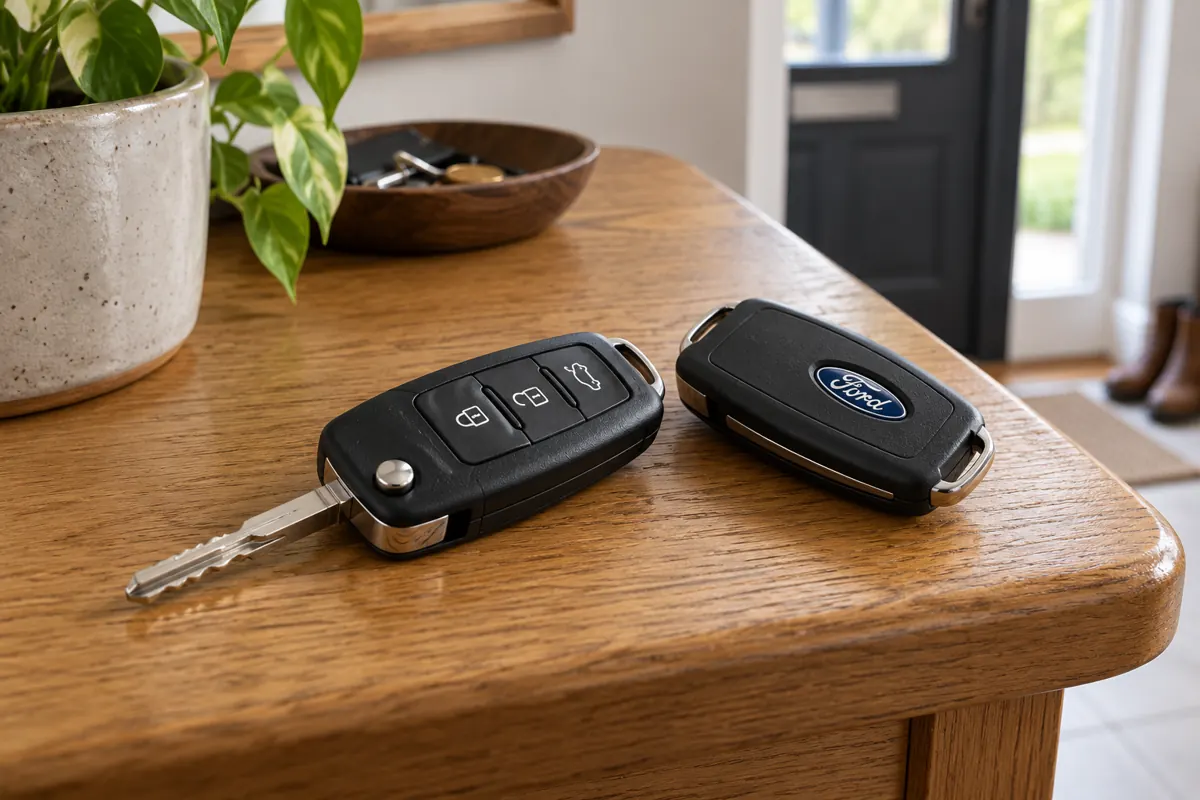
Check every key you believe you have before making the enquiry. A key stored in a drawer may open a door but not start the car, or its remote battery may be flat. Explain the actual results rather than simply saying there are two keys. The number of working programmed keys can affect the supported method and what the provider needs at the appointment.
Keep the spare away from the main ring and make sure it can be reached when needed. Carrying both sets together defeats much of the purpose of a backup. If a family member keeps it, agree how it can be accessed during ordinary working hours or an unexpected problem, without attaching identifying vehicle or address information to the ring.
Our spare car key information explains the details to provide for a local enquiry. A spare may reduce the practical consequences of losing the main key, but it does not guarantee that every future lockout or starting fault can be avoided.
Decide whether your Ford car key needs replacing or repairing
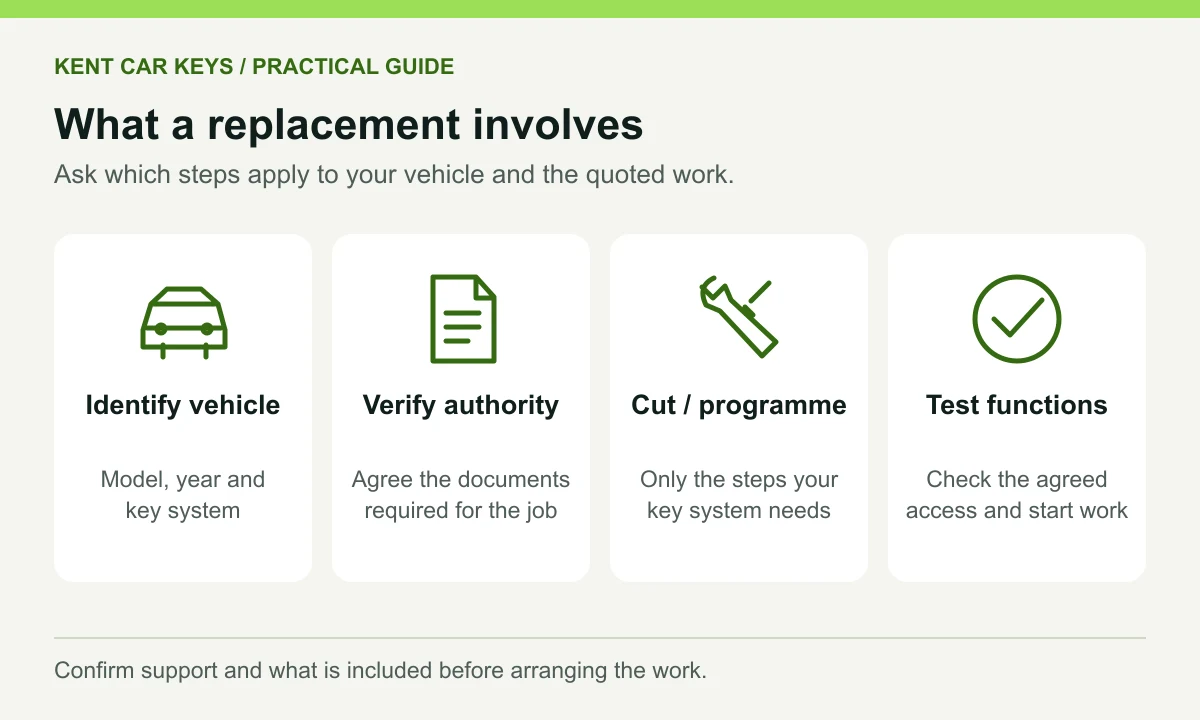
Treat repair and replacement as options to be assessed. A battery change may suit a remote with the relevant symptoms; a case repair may suit sound electronics in a damaged shell. A new key may be required when components are missing, unsuitable or damaged beyond a supported repair. There is no single answer based solely on the age of the key.
Ask the provider to explain the proposed work in plain language. Will the original electronics remain? Is a new blade being cut? Is Ford key replacement being supplied as a complete product or is the quote for one part? Clarify whether programming and testing are included. Understanding the scope helps you compare quotations fairly.
A provider should also consider whether the vehicle is contributing to the symptoms. If both keys fail in the same way, or there are wider electrical warnings, disclose that before booking. Replacing the fob cannot promise to cure a receiver, battery or lock fault on the car. Ask what diagnosis is included and how additional work would be authorised.
Prepare the right information before booking
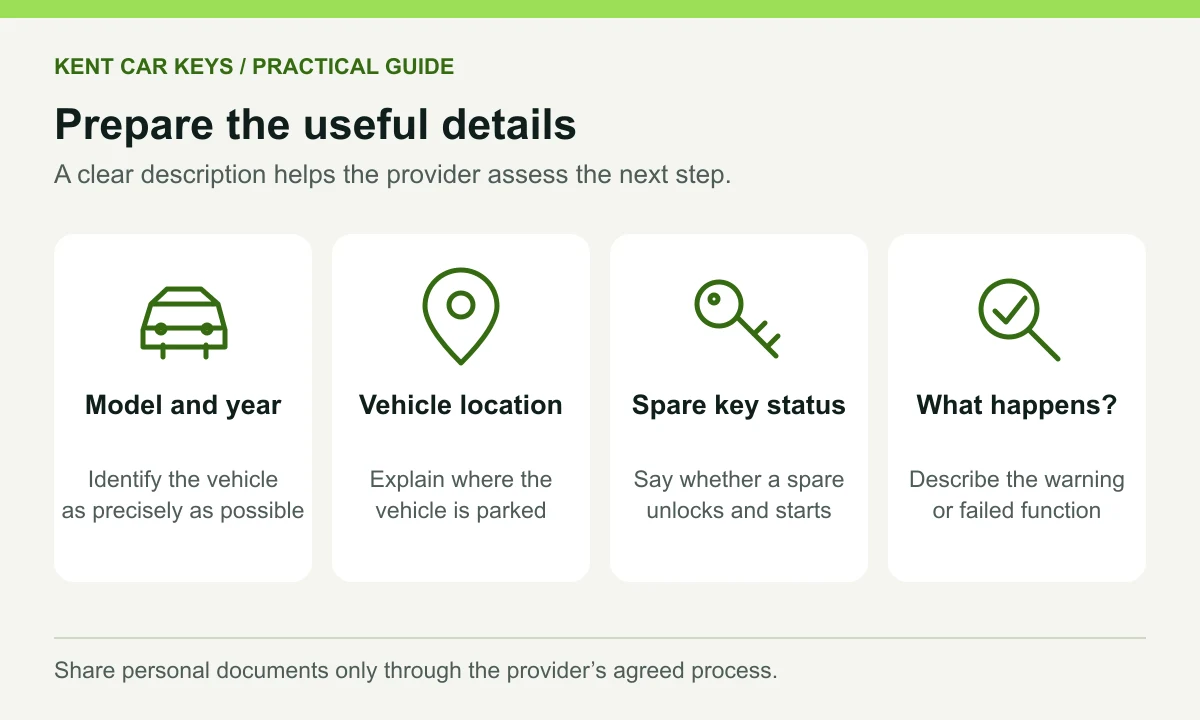
Give the Ford model, registration year, location and key arrangement: a physical ignition key or a start-button fob. State how many working keys remain and which functions fail. Mention damage, water exposure, previous repairs and battery changes. If there is a warning message, use its wording rather than describing every warning as an immobiliser problem.
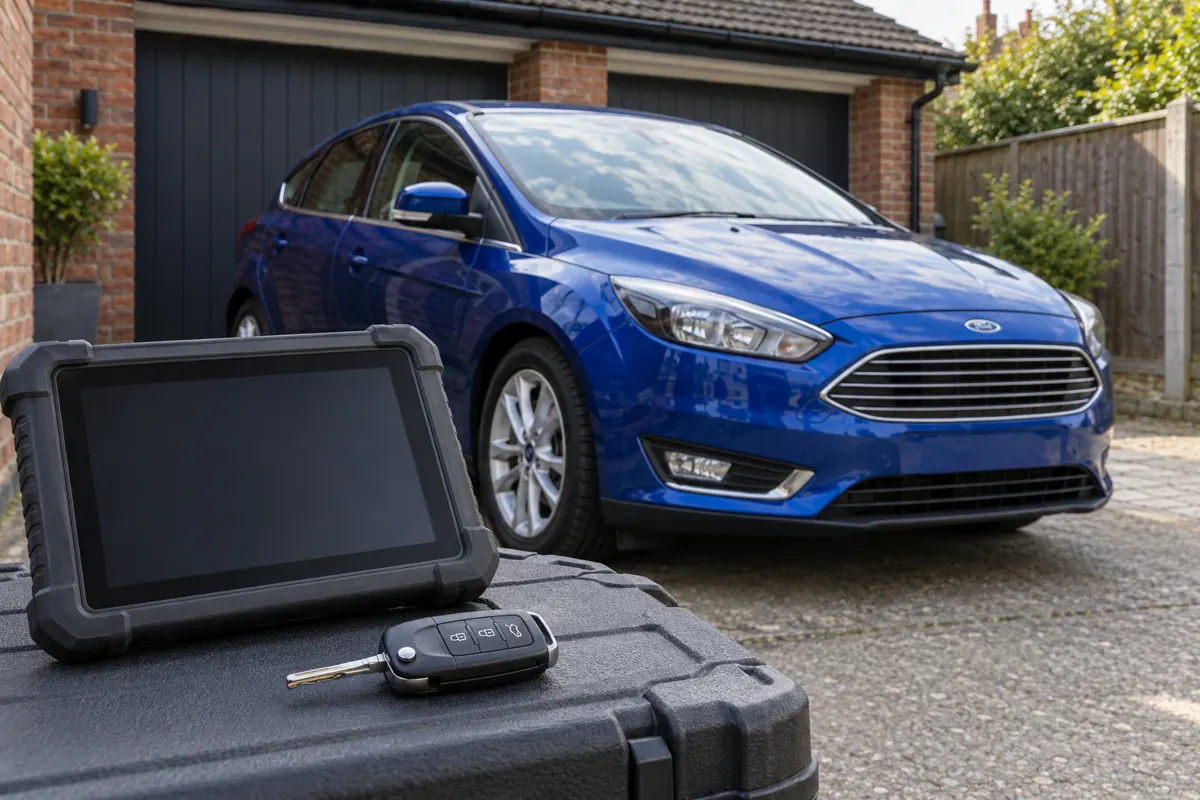
Keep identification and vehicle documents available, and ask what the provider needs before attendance. Ford’s official replacement-key guidance explains the dealer route and its identification requirements. Other providers should explain their own verification process. A key enquiry should not require you to publish sensitive vehicle-security details publicly.
Tell the provider about practical access: a gated site, underground car park, height restriction or vehicle parked tightly against another car. If documents or keys are inside the locked vehicle, explain that too. Confirm coverage and availability for your location rather than treating a service-area map as a promise of a particular arrival time.
Compare complete quotes for Ford key replacement
Ask for a quote that covers the actual job rather than a starting figure. Clarify attendance, diagnosis, parts, blade cutting, programming and testing, plus VAT where applicable. If an existing key will be repaired, ask what happens if assessment shows a different fault. Agree that any additional work will be explained before it is carried out.
Compare a Ford dealer and a supported auto locksmith on the same information. A dealer can explain its manufacturer route and parts availability. A locksmith can confirm whether it supports your exact Ford and whether work can be performed at your location. Neither route should be assumed cheaper or faster without a quote and an appointment that applies to the vehicle.
Ask about warranty terms, what functions are covered and whom to contact if the problem returns. Keep written details of the agreement. A clear explanation and a tested result are more useful than an unsupported promise that a key will work forever or that every fault can be repaired during a single visit.
Check the result before relying on the key again
Test the repaired or replacement Ford car key in each agreed function. Confirm remote locking and unlocking, mechanical operation where applicable and engine starting. Keep other keys away during the test. If keyless entry or starting is included, ask the provider to demonstrate it using the procedure appropriate to your vehicle.
Check retained keys as well as a new one. Ask about any warning that remains and keep the invoice and warranty information. If the symptom was intermittent, record what was found and which repairs were completed so you can describe a recurrence accurately. Do not assume that a new case proves the underlying electrical fault was resolved.
Store the keys securely after testing. Police advice on vehicle theft prevention includes precautions for keyless vehicles and checking that the vehicle is locked. Follow the manufacturer’s guidance as well, particularly for storing and using a keyless fob.
Build a short record of the Ford key symptoms
A clear record can be more useful than repeatedly trying new fixes. Write down which key you used, which function failed and what the vehicle did. Note whether the fault followed a drop, water exposure, battery change or case repair. If you have a spare, record its result separately so the comparison remains meaningful.
Take a dashboard photograph only when parked safely. Do not include identity papers, key codes or unnecessary vehicle-security details in a public request for advice. Share relevant information privately with the provider you choose. If the problem disappears, keep the record; intermittent Ford car key symptoms can still deserve an assessment.
Avoid describing every failure as a dead chip or lost programming. Those are possible explanations for some problems, not observations you can establish by pressing a button. Saying “the remote unlocks but the engine displays this message” helps the provider ask the next useful question without inheriting an untested diagnosis.
Distinguish cosmetic wear from a functional Ford key fault
A worn logo or scratched case is different from a loose blade, broken button or intermittent function. Cosmetic wear alone does not prove that a Ford car key needs replacing. Focus on whether the key remains secure, operates correctly and can be used without unusual force. Ask for a condition assessment if you are unsure.
If you prefer a fresh case, tell the provider that it is a cosmetic or casing enquiry and ask whether suitable original parts can be retained. Confirm what the work includes and whether any existing fault is also being diagnosed. A repaired appearance should not be used to imply that every internal component has been renewed.
Likewise, a clean-looking Ford key is not proof of healthy electronics. Water exposure or internal damage may not be visible from the outside. Explain the history accurately, especially if the key has already been opened or parts moved. This helps the provider judge the actual requirement rather than its appearance.
Plan around the assessment without forcing a failing key
If the only Ford car key is damaged or unreliable, make practical arrangements before an essential journey. Ask the provider what it needs to assess the key and whether the vehicle must be present. Do not continue forcing a blade or repeatedly dismantling the remote simply because a booking is inconvenient.
Keep a tested spare available if you have one, and tell other drivers about the symptoms. A household member should not discover an intermittent locking fault for the first time after parking far from home. Agree which key is being used and where the reliable backup is kept.
Early action gives you time to consider repair, replacement and spare-key options, but it does not guarantee a lower price or remove every transport issue. Ask for a real appointment and clear scope. That turns a concern about whether your Ford car key needs replacing into an evidence-based decision.
Ask Kent Car Keys about your Ford key
Use our Ford key replacement information to make a specific enquiry. Explain whether you need help with damage, an unreliable remote, starting symptoms or a spare. Kent Car Keys can discuss the next step after checking the vehicle and location details; compatibility, availability and price need confirmation for the actual job.
The five signs above are prompts to act on evidence, not a rule that every worn-looking key must be replaced. Keep a clear record, avoid forcing damaged parts and ask for an assessment that distinguishes the Ford car key from the locks and electronics it operates. That gives you a practical basis for choosing a repair, replacement or tested spare.