

Key not detected on VW Tiguan? Start by checking that the correct key is inside the car, try your spare if available, and consult the handbook for your vehicle’s emergency key-recognition procedure. A weak fob battery is one possibility, but the message alone does not identify the faulty part. Work through the seven checks below before deciding whether you need a battery, key repair or further diagnosis.
This guide separates straightforward observations you can make while safely parked from work that needs a locksmith or workshop. Tiguan generations, key designs and equipment differ, so use the instructions for your own vehicle rather than copying a sequence from a different model. If you need help in Kent, South East London or our covered parts of Essex, tell Kent Car Keys the vehicle details and what you have already tried.
Key not detected on VW Tiguan: what it means
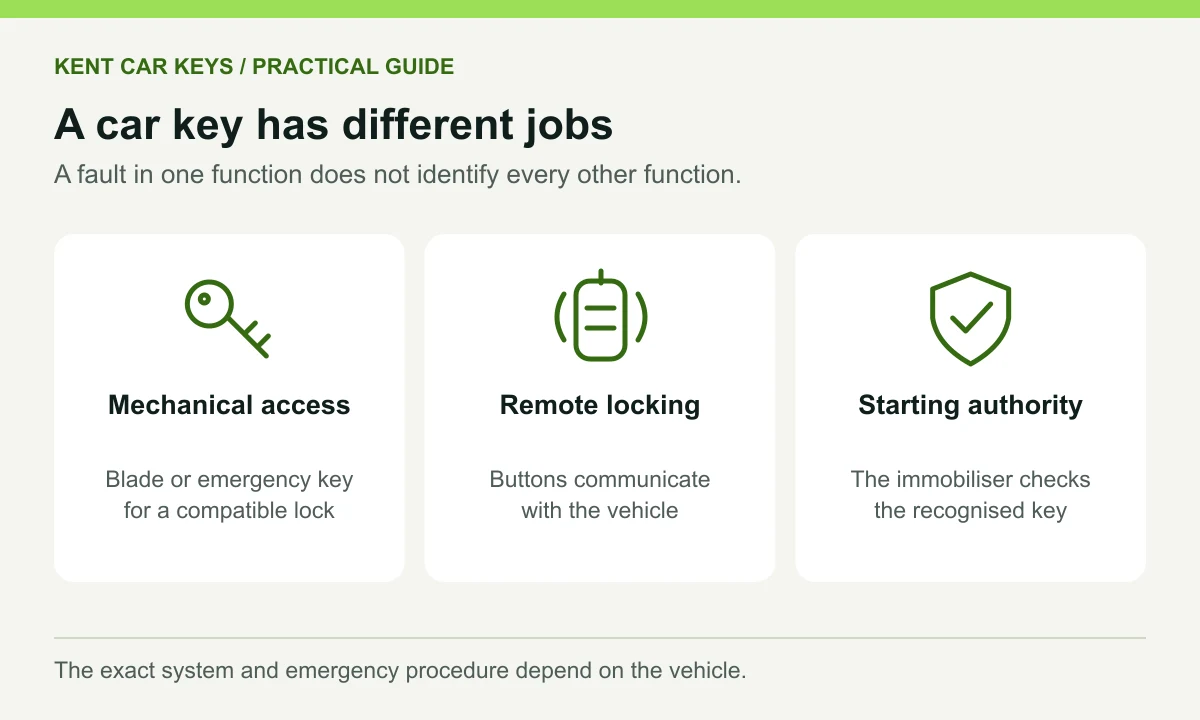
The useful starting point is the symptom: the car has not recognised a valid key in the way it expects. That is different from proving that the entire key has failed. Write down the exact dashboard wording, whether the engine is already running, and whether the remote buttons still lock and unlock the doors. Those details give a technician a much better starting point than “the key is broken”.
Key not detected on VW Tiguan models can accompany a remote-control problem, but entry and starting are separate observations. For example, a remote might unlock the car while a starting problem remains. Equally, a vehicle may recognise a key through its specified backup procedure even though normal remote operation is unavailable. Explain each function separately when asking for advice; do not assume one successful action proves everything else is working.
Volkswagen’s key-not-in-vehicle warning guidance explains that its amber indication can occur when the key leaves a keyless vehicle while the engine is running. Check the actual message and your handbook rather than treating every key symbol as the same fault. The seven checks that follow help you gather useful information without buying parts on a guess.
Check 1: confirm the key and the circumstances
When investigating a VW Tiguan key-not-detected problem, first confirm who has the key. A passenger may have taken it indoors, or the key you have picked up may belong to another vehicle. Check bags and coat pockets without leaving a running car unattended. If you are away from a safe parking place, prioritise getting appropriate roadside help over experimenting with the vehicle.
Record when the warning began. Did it happen after changing a battery, dropping the remote, returning from a holiday or collecting the vehicle from a workshop? Was the problem sudden, or had the locking range reduced over several days? A clear sequence helps distinguish a new symptom from an existing intermittent problem. Include events that seem minor; let the person diagnosing the fault decide which are relevant.
Take a photograph of the dashboard while stationary if you can do so safely. Note any other warning messages instead of clearing them or disconnecting components. When reporting a VW Tiguan key-not-detected problem, distinguish normal dashboard operation from a car with no electrical response at all. Keep the photograph for your enquiry and avoid posting vehicle-security information publicly.
Check 2: compare with a known working spare
A spare provides a useful comparison when investigating a Volkswagen Tiguan key warning. If you have another key that previously operated this Tiguan, try it under the same conditions and record the result. Check remote locking and normal starting separately. A key that has never worked with the vehicle is not a reliable comparison, even if its case looks identical.
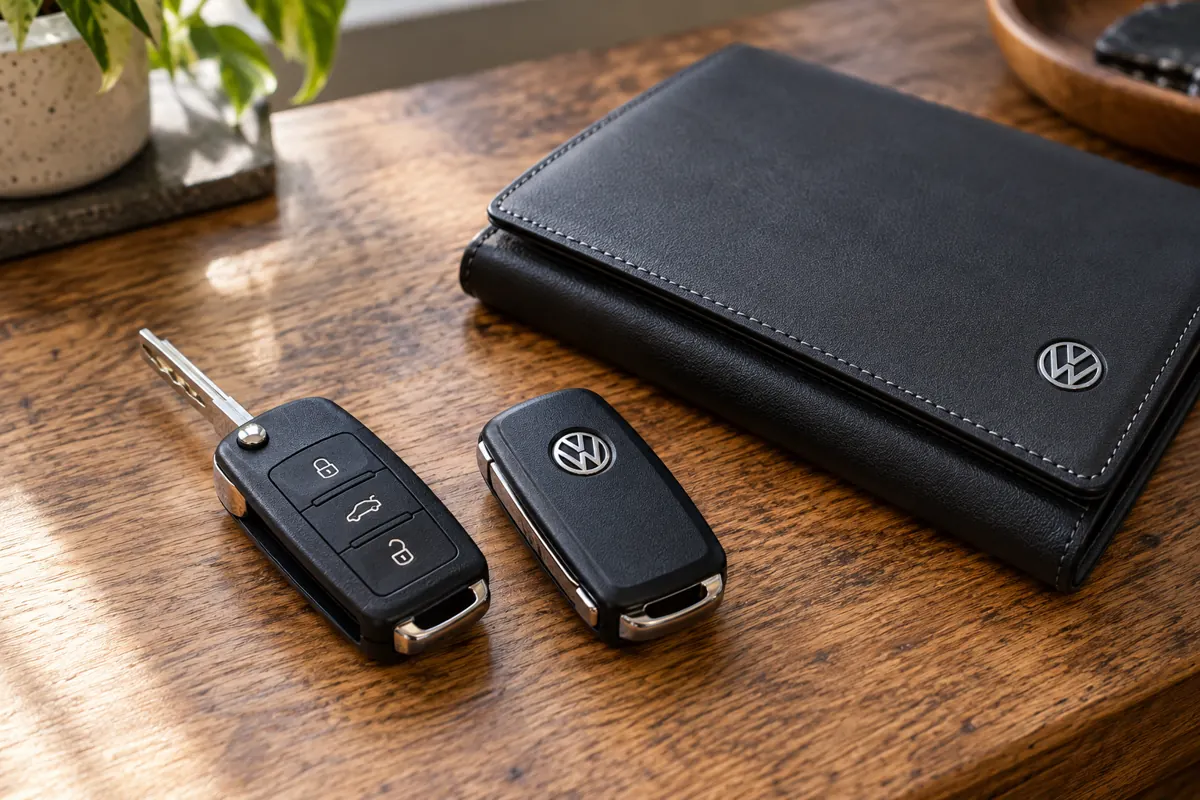
If the spare works and the everyday key does not, that observation helps focus the enquiry on differences between the keys. It still does not tell you whether the issue is the battery, damage, an internal component or another cause. If both fail, tell the technician that too. Two unsuccessful keys are useful evidence, but they are not proof that the vehicle itself must be faulty.
An enquiry about a VW Tiguan key-recognition problem is easier to discuss when your notes say “spare starts the car, main key does not” rather than simply “tried everything”. Keep the working spare somewhere secure and available to its authorised user. Avoid dismantling both keys together: you could lose your useful comparison and make it harder to explain what changed. If you only have one key, say so at the start of the enquiry.
Check 3: key not detected on VW Tiguan and battery symptoms
Before buying a battery for key not detected on VW Tiguan models, consider what the remote was doing beforehand. Reduced operating range, inconsistent button response or a specific battery warning are worth reporting. These observations can support a battery check, but none guarantees that replacing the cell will solve every symptom. A damaged button or another fault can also leave you with an unresponsive remote.
Identify the battery specification from the instructions for your exact key, and check the markings when the key is opened correctly. Do not assume every Tiguan fob uses the same cell simply because online photographs look similar. Use the specified size, voltage and orientation. If the case resists opening, stop rather than forcing a screwdriver through a seam and damaging the housing or electronics.
After any battery change, close the key securely and repeat your original observations. Does it lock? Does it unlock? Does the VW Tiguan still show “key not detected” when you attempt to start normally? Keep the answers separate. A new cell is a change you can report, not evidence that every battery-related possibility has been eliminated. Tell the technician where the cell came from and whether the problem changed immediately afterwards.
Keep both new and used coin cells away from children and pets, and do not leave a loose cell in a pocket or on a worktop. Follow RoSPA’s button battery safety advice and use a suitable battery collection point for disposal. If the compartment no longer closes securely, have the damaged housing assessed rather than carrying it open.
Check 4: key not detected on VW Tiguan and the handbook
For key not detected on VW Tiguan models, find the owner’s manual that matches your vehicle. Search for vehicle keys, Keyless Access, emergency starting and troubleshooting. The location at which a key must be presented, and the sequence used, can depend on the model and equipment. “Hold it near the ignition” is too vague to use as a universal instruction.
For context, Volkswagen’s Tiguan and Tiguan R manual, edition November 2021, describes an emergency recognition position at the steering column for the illustrated Keyless Access system. This is a manufacturer example, not confirmation that every UK Tiguan uses that arrangement. Check the diagram and procedure for your own car before attempting it.
If the documented procedure allows the vehicle to recognise the key, record that result alongside the normal-starting failure. If key recognition still fails, record that instead and seek advice. Avoid repeated attempts, internet immobiliser-bypass suggestions or dismantling steering-column trim. The purpose of the handbook check is to use a designed owner function, not to work around vehicle security.
Check 5: note where and how the fault occurs
A useful enquiry about a VW Tiguan key-recognition problem includes whether the problem happens everywhere or only in one location. Note where the key is normally carried and whether the symptom began with a new pouch, bag or nearby device. Check the handbook’s positioning guidance and try the key in the normal instructed position. Make simple observations before changing several things at once.
Change one condition at a time where it is safe and practical. For instance, take the key out of its bag before comparing the response, then note whether anything changed. Do not turn a single successful attempt into a firm diagnosis of interference. Intermittent symptoms can disappear temporarily for several reasons, and a technician may need the history to decide what to test next.
For an intermittent VW Tiguan key warning, a short dated record is more useful than replacing parts each time. Include the key used, the location, the remote-button response and the dashboard message. If you cannot reproduce the problem during a visit, that record still gives the technician something concrete to assess. Keep the notes factual and distinguish what you saw from what you suspect caused it.
Check 6: inspect visible damage and wider symptoms
When investigating a Volkswagen Tiguan key warning, consider whether the key was dropped, crushed, washed or exposed to liquid. Look at the outside for cracks, loose sections or buttons that no longer feel normal. An intact case does not prove the electronics are undamaged. Equally, a worn-looking case does not automatically mean a complete replacement is necessary. Describe the condition before deciding on a remedy.
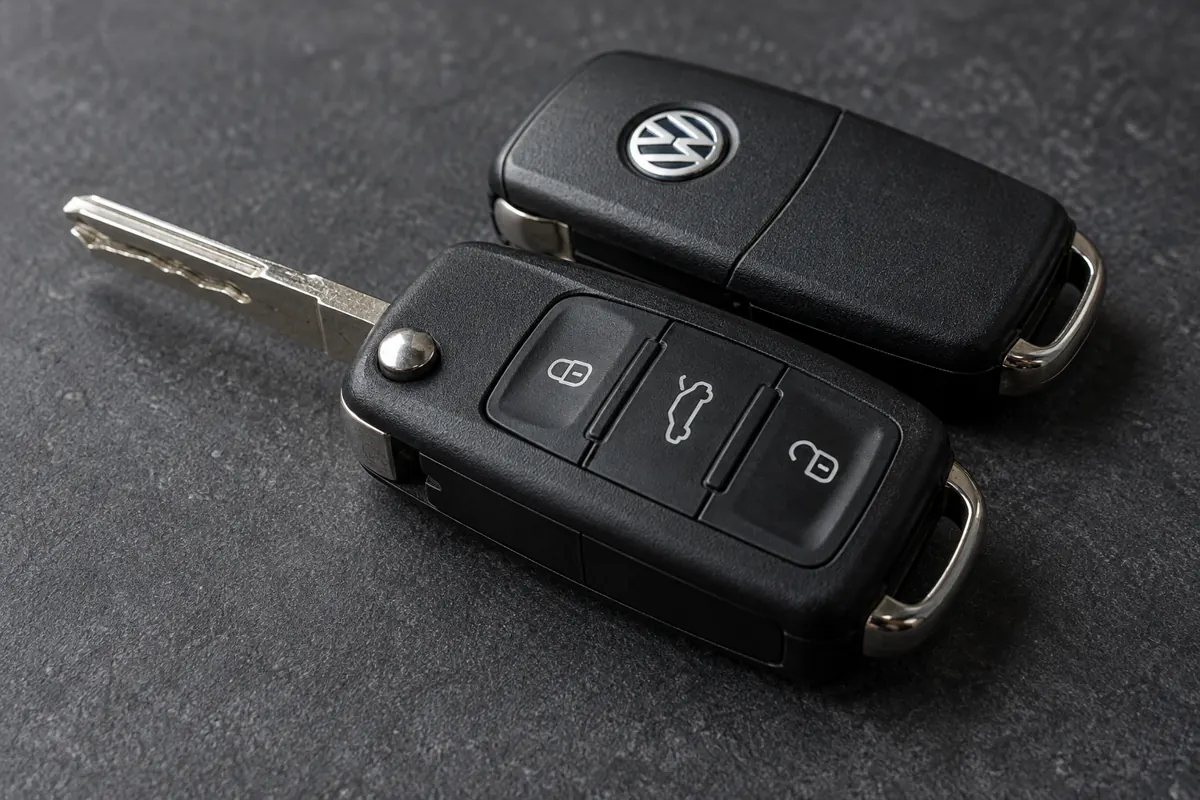
Keep any detached pieces together and stop opening the key beyond the battery access described in the handbook. Do not bend contacts, solder the board, heat the remote or apply cleaning liquid as an experiment. If there has been liquid exposure, explain when it happened and what you did afterwards. Useful information about damage helps someone assess whether a repair inspection is appropriate.
When discussing a VW Tiguan that shows “key not detected”, mention dim displays, unrelated warnings or little electrical response as well. The fob cell and the vehicle’s 12-volt battery are different components. Ask a suitable workshop or roadside provider to assess vehicle-power concerns. Do not disconnect the car battery or attempt electrical work simply to clear a key message.
Check 7: arrange diagnosis for key not detected on VW Tiguan
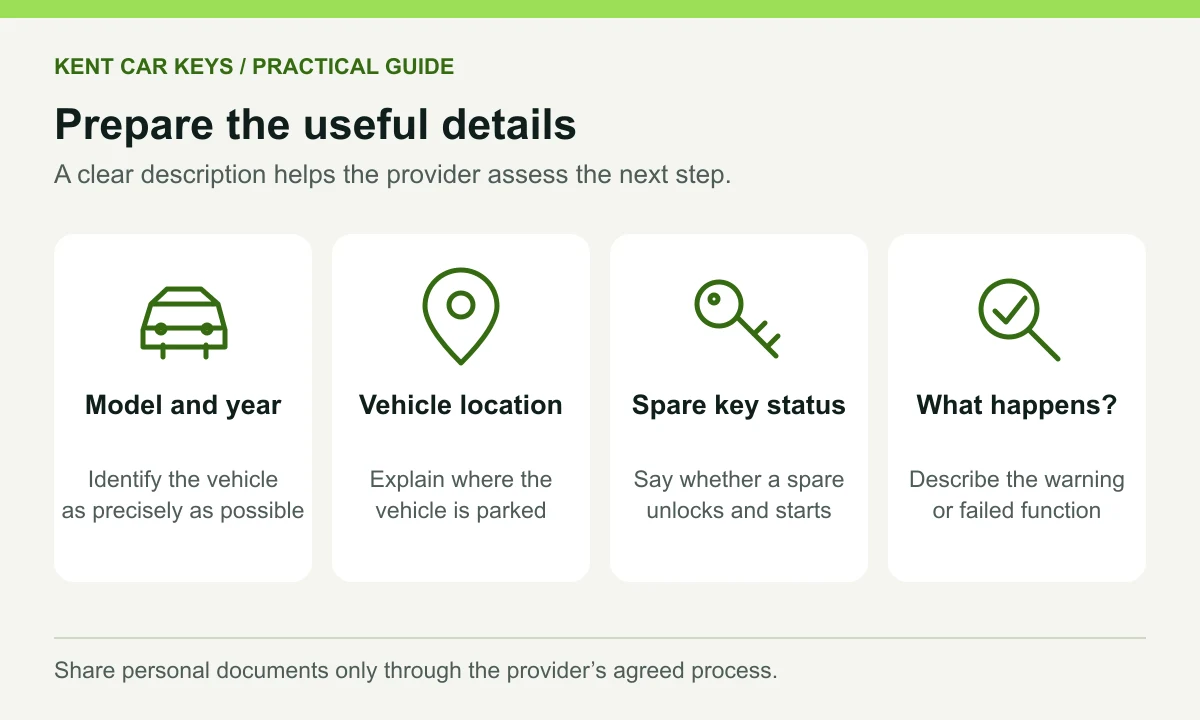
For an unresolved VW Tiguan key-not-detected problem, contact a professional with a concise account of the results. Provide the make, model, registration year, location and whether you have a working spare. Explain whether the remote locks the doors, whether normal starting works, and what happened when you followed the relevant handbook procedure. Mention any previous repair or battery change.
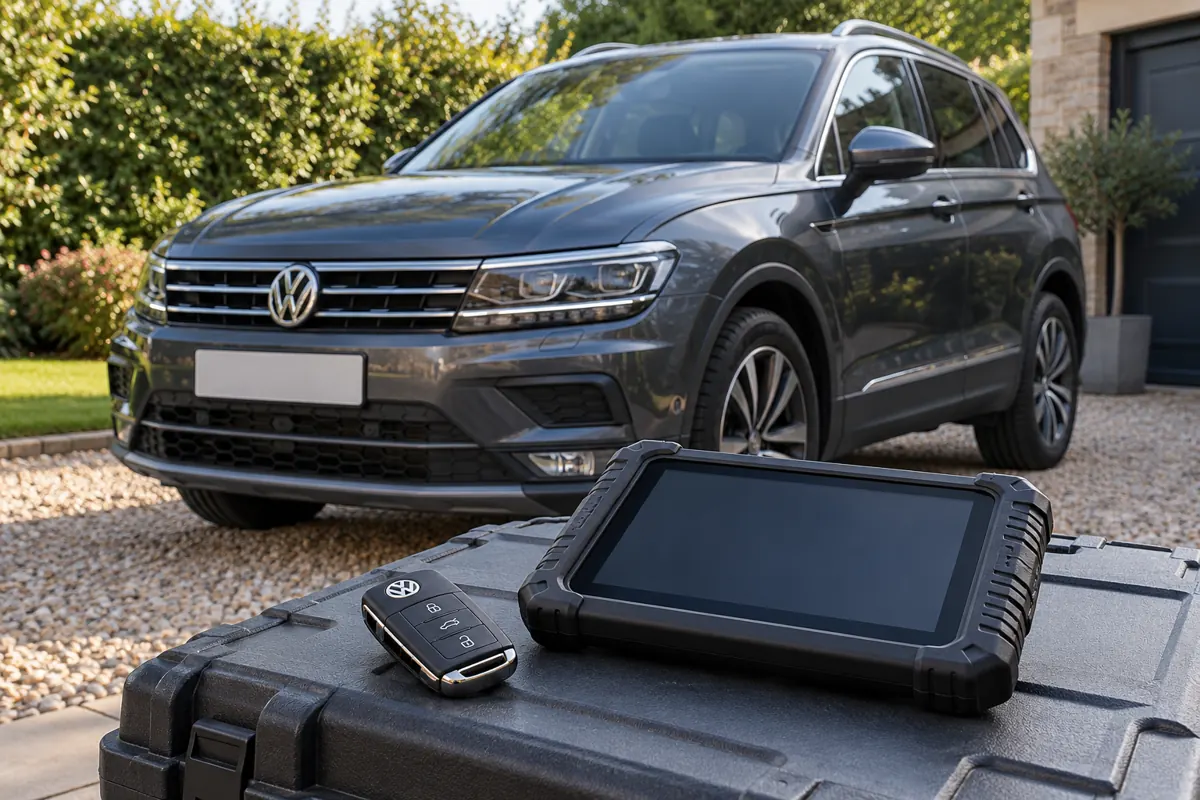
Ask what can be checked for your particular vehicle and what information is needed before a visit. A key enquiry is not a confirmation that the job can be completed on every Tiguan generation. Availability, equipment compatibility and the appropriate next step need checking. If a workshop or dealer investigation is more suitable, understanding that early can save you arranging the wrong appointment.
For local assistance with key not detected on VW Tiguan models, see our Volkswagen key replacement guide and car key and fob repair service. Tell Kent Car Keys where the car is parked so we can check coverage and discuss the enquiry. Avoid sending identity documents or security codes through an initial general enquiry; ask how any required ownership checks will be handled.
Battery replacement, synchronisation and programming
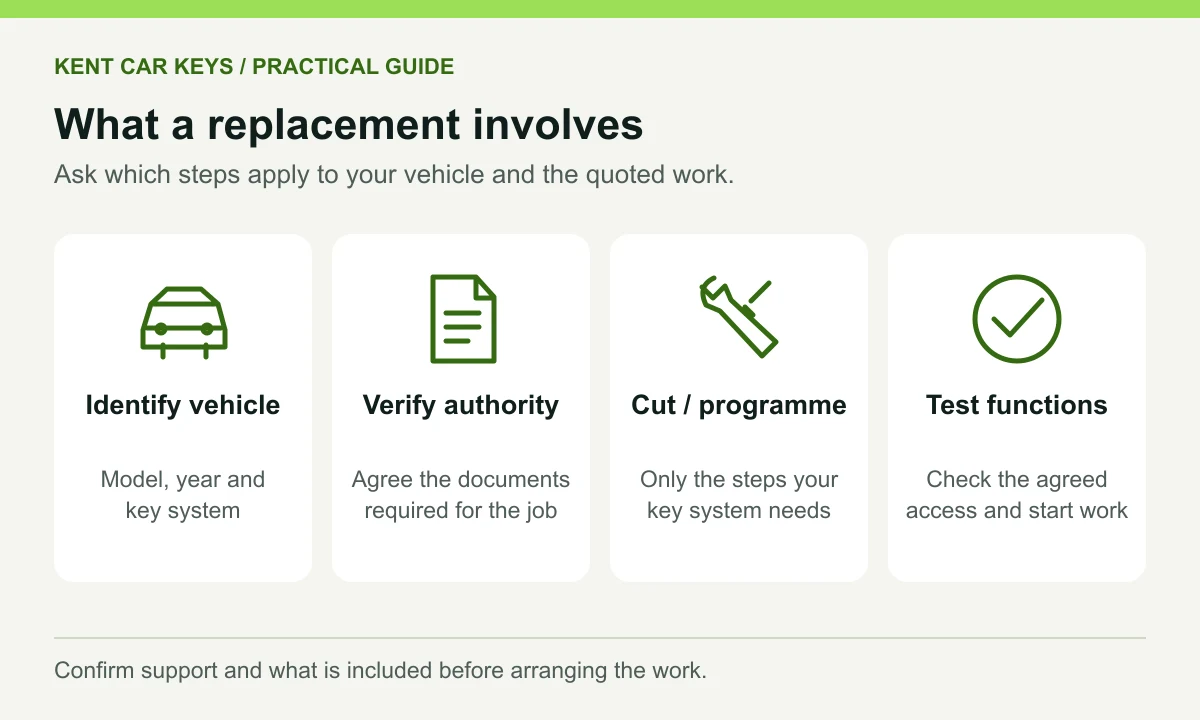
These terms describe different work, so ask what is actually being proposed for key not detected on VW Tiguan models. A battery replacement changes the power cell in the remote. Remote synchronisation concerns the remote’s communication for its relevant functions. Immobiliser key programming concerns the vehicle recognising an authorised key for starting. Hearing the word “reset” does not explain which of those processes is meant.
A battery change does not, by itself, establish that immobiliser programming is required. Volkswagen’s November 2021 manual describes remote synchronisation separately from its emergency-starting guidance. Follow only the instructions applicable to your vehicle, and ask for diagnosis when the result is unclear. Avoid a generic programming sequence copied from a different generation or a video with an unidentified key.
When comparing quotes for a VW Tiguan key-recognition problem, ask whether the service covers inspection, a remote repair, a replacement key, cutting or programming. Explain which keys you still have. Understanding the proposed scope makes it easier to compare options and avoids expecting a battery-only appointment to resolve an unrelated starting fault.
Key not detected on VW Tiguan: quote considerations
There is no reliable single price for resolving key not detected on VW Tiguan models. The relevant work depends on what has failed and which key system the vehicle uses. A complete working spare, a damaged everyday remote and a situation with no usable keys present different starting points. Ask for a vehicle-specific quote rather than treating an online battery price as the total cost of resolving the fault.
When comparing quotations, provide the same information to each business. Ask what the quoted amount includes, whether diagnosis is separate, whether a visit is included and what happens if inspection shows a different problem. Check any applicable tax and additional charges before agreeing to work. Written clarity helps you assess the offer without assuming that the cheapest headline figure covers the same service.
If key not detected on VW Tiguan has prompted you to think about a backup, read our spare car key guidance. Discuss compatibility while your available key can still be assessed. A spare is useful planning, but it should not replace investigating an unexplained vehicle fault. Make clear whether your priority is repairing the current problem, adding another key, or both.
Choose the next step from what you observed
Before booking work for a VW Tiguan key-recognition problem, put your observations into a short summary. Begin with the problem that matters most: you cannot get into the car, you can get in but cannot start it, or the car starts but the remote behaves inconsistently. These are different requests. Saying which one applies helps the person answering your call understand the immediate need without having to reconstruct the whole history.
Next, explain the comparison with your spare. If one key works normally, say which key you can bring to an appointment and whether the faulty one is also available. If neither works, explain whether both stopped at the same time or the spare had already been unused and untested. Avoid describing the spare as working unless you have actually checked it recently. The distinction can change which checks are useful.
Then explain what changed when you tried the handbook procedure or replaced a cell. When discussing key not detected on VW Tiguan models, explain if the instructed recognition method worked and whether a remote fault remains. If nothing changes, that is equally useful. Include unsuccessful checks honestly; there is no benefit in repeating a procedure just to produce the answer you expected.
Finally, make the practical arrangements clear. Give the postcode, whether the vehicle is at home, at work or in a car park, and any access restrictions a visitor would need to know. Ask about availability rather than assuming a guaranteed arrival time. If a key recognition problem has left the vehicle somewhere unsuitable for a visit, discuss that before arranging attendance. A clear description of both the symptoms and the location helps everyone agree an appropriate next step.
If a key has gone missing rather than stopped responding, our guide to lost Volkswagen keys and replacement options covers that different starting point.
Keep a useful record and plan the next step
After work on a VW Tiguan key-recognition problem, keep the job details and any advice about follow-up checks. If the symptom returns, say whether it is identical or has changed. Record which key was involved and whether the work improved locking, starting or both. That makes a follow-up conversation more precise and helps avoid repeating the same unsuccessful assumptions.
Look after the key in normal daily use: keep the housing closed, avoid unnecessary exposure to moisture and do not ignore a damaged case or sticking button. Check a spare’s operation periodically in a safe setting, and store it securely rather than leaving it in the vehicle. Use the handbook and the actual symptoms to guide battery attention instead of treating a fixed replacement interval as suitable for everyone.
For help with key not detected on VW Tiguan models in our service area, contact Kent Car Keys with your vehicle and location details. Tell us what works, what fails and which checks you have completed. We will discuss the available next step for your enquiry. Keep those notes available when we speak so the conversation starts with the checks you have already completed.
If the buttons behave differently from the ignition, our Volkswagen key fob troubleshooting guide helps you separate the symptoms.