

VW key fob not working? Check whether the problem affects remote locking, engine starting or both. Try a known working spare if you have one, note any dashboard warning and consult the correct Volkswagen handbook before opening the fob or changing its battery. A flat remote battery is one possibility; it does not prove that the key needs programming or replacement.
This guide explains seven sensible checks and the observations that help a provider diagnose a Volkswagen remote fault. Procedures differ by model, production year and key system. Stop if a key is damaged, wet or difficult to open, and ask for vehicle-specific help rather than forcing the case or following an unrelated online reset.
Understanding the Volkswagen Key Fob
What is a VW Key Fob?
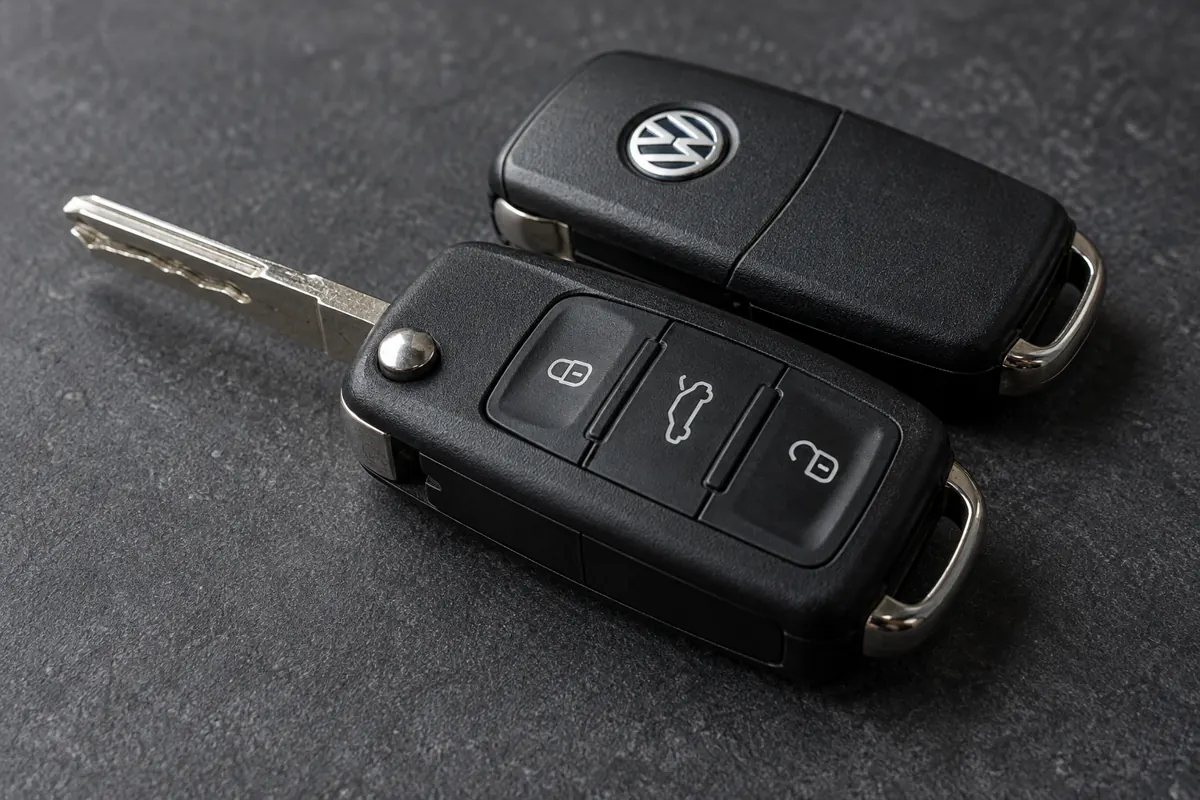
A VW key fob is an advanced device that has replaced the traditional key for many Volkswagen vehicles. This sophisticated fob serves as your primary interface with your car, letting you lock or unlock the doors with the push of a button and, in many cases, start the engine without inserting a physical key into the ignition. It’s an integral part of modern vehicle security and convenience, acting as your Volkswagen key.
Common Volkswagen Key Fob Features
Remote and keyless functions vary by vehicle and equipment. A button may operate central locking or the boot, while a keyless system may allow entry or starting with the fob nearby. Do not assume a feature shown for another market or model is fitted to your car. Check the handbook for the controls actually provided.
How the Key Fob Works with Your Vehicle
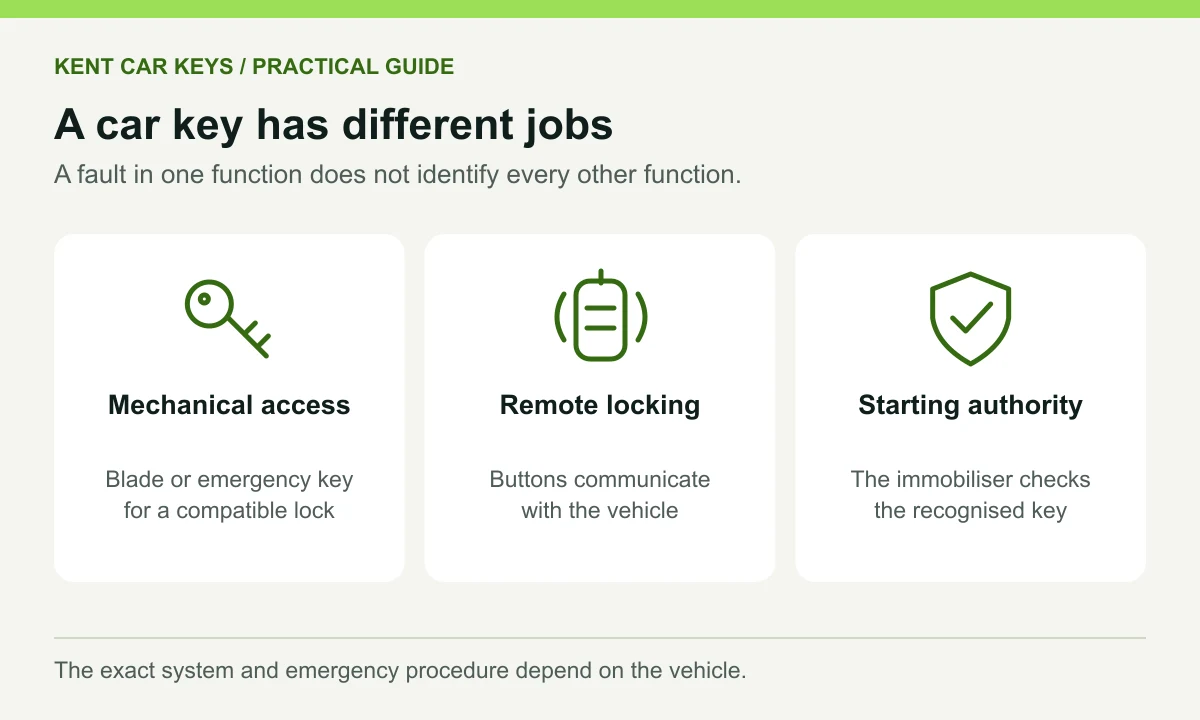
Remote door locking and immobiliser authorisation are different functions. A key can start the vehicle even when its remote buttons fail, or unlock the doors while a starting problem remains. Separating these symptoms is more useful than treating every fault as a key that needs reprogramming.
Why Your Key Fob Stops Working
Battery Issues in VW Key Fob
A weak fob battery can cause reduced remote range or inconsistent operation. Confirm the specified battery type and fitting procedure in the handbook rather than assuming every Volkswagen key uses the same cell. A correct battery replacement may restore remote operation, but persistent faults need further assessment.
Common Volkswagen Key Issues Explained
Beyond a dead battery, several other common Volkswagen key issues can prevent your key fob from working. These might include:
- Damage to the fob’s internal circuit board, perhaps from dropping it or exposure to moisture, which can disrupt the signals needed to unlock the doors or start the engine.
- Worn-out buttons on the fob.
- Issues with the transponder chip inside the VW key fob, which can prevent it from communicating correctly with your vehicle.
These issues can lead to frustrating key problems that require more than a simple battery replacement.
Immobiliser Faults Affecting Key Functionality
Immobiliser faults represent a more complex reason why your Volkswagen key fob might not be working. The immobiliser is a critical anti-theft system that prevents the engine from starting unless it recognises the correct transponder chip in your VW key fob. If there’s a fault in this system, or if the transponder chip is damaged or not recognised, the vehicle will not allow the engine to start, even if remote functions like unlocking the doors appear to work. Diagnosing these immobiliser faults often requires specialised tools and expertise beyond basic troubleshooting.
Troubleshooting Your Volkswagen Key Fob
Steps to Diagnose Key Fob Problems
When your Volkswagen key fob stops working, a systematic approach to troubleshooting can help pinpoint the problem. Here are the initial steps to take:
- If the handbook supports owner battery replacement, use the specified fresh cell and correct polarity. Observe whether remote operation changes.
- If there’s still no response, inspect the physical key fob for visible damage, such as cracks or loose components, which might indicate a circuit board issue.
Sometimes, simply replacing the VW key fob battery is all it takes.
Synchronisation is different from programming
Volkswagen advises that a remote may need synchronisation after its battery is replaced. Follow the procedure in the handbook for your exact vehicle, or ask a retailer or qualified provider to help. Restoring communication with an existing remote is different from authorising a new transponder to the immobiliser. Do not assume a sequence of button presses can programme any replacement key.
When to Consult a Locksmith for Key Issues
While some common Volkswagen key issues can be resolved with handbook-supported checks such as a battery replacement, professional help is sometimes essential. If your VW key fob is still not working after these attempts, it’s time to consult a locksmith, especially if you suspect:
- Immobiliser faults
- Physical damage to the transponder chip
A skilled locksmith offers specialised services, including key programming, key replacement, and on-site diagnostics for complex issues that might affect your car key or engine starting. They can also provide a spare key or a new key if your original is beyond repair, saving you a trip to the dealership.
Replacing Your VW Key Fob
Key Fob Replacement Options
When your VW key fob stops working beyond simple fixes like a battery replacement, or if you’ve lost your original, you may need a key fob replacement. You have several options for obtaining a new key fob. One common route is through a Volkswagen dealership, which can provide a new key that is precisely matched to your vehicle. Alternatively, specialised locksmith services can often provide a high-quality replacement key, often at a more competitive price.
Battery Replacement for Volkswagen Key Fob
Use the exact cell specification and opening method given for the fob. Note the old battery orientation before removing it, avoid damaging contacts and close the case securely. If access is unclear or the case resists, stop and seek help. Volkswagen recommends retailer assistance because synchronisation may be needed after replacement.
Finding Reliable VW Key Replacement Services
Finding reliable VW key replacement services is crucial when facing a dead key fob or a broken key. While a dealership can provide a new key and perform key programming, an experienced locksmith specialising in automotive keys offers a convenient, often more affordable alternative. Look for a locksmith who advertises specific services for Volkswagen models, and ask them to confirm equipment, parts and compatibility for your exact vehicle before booking.
Check 1: describe how the VW key fob is not working
Before changing anything, write down what happens when you press lock and unlock. Do the indicators flash? Does the boot respond? Does the fault happen at every door or only one? Observe the vehicle as well as the fob. A light on the key, where fitted, is useful information but does not prove that the car receives or accepts its signal.
Next, separate entry from starting. If the remote does nothing but the car starts normally once you are inside, report that distinction. If remote locking works but the dashboard says the key is not detected, describe the exact message. A VW key fob not working in one function does not establish that every part of the key or the vehicle has failed.
Keep the circumstances simple and repeatable. Note the time, location, weather and whether the fob was recently dropped, opened or exposed to water. Avoid repeatedly pressing buttons while moving around the car. A short, clear description gives a technician a better starting point than a list of attempted resets whose effects are uncertain.
Check 2: compare with a known working Volkswagen spare
If a spare is available, test it under the same conditions. Use the same parking location and try the same lock, unlock and start functions. Keep other keys away during the comparison so you know which one the car is detecting. A spare that has not been tested for years should not automatically be treated as a reliable reference.
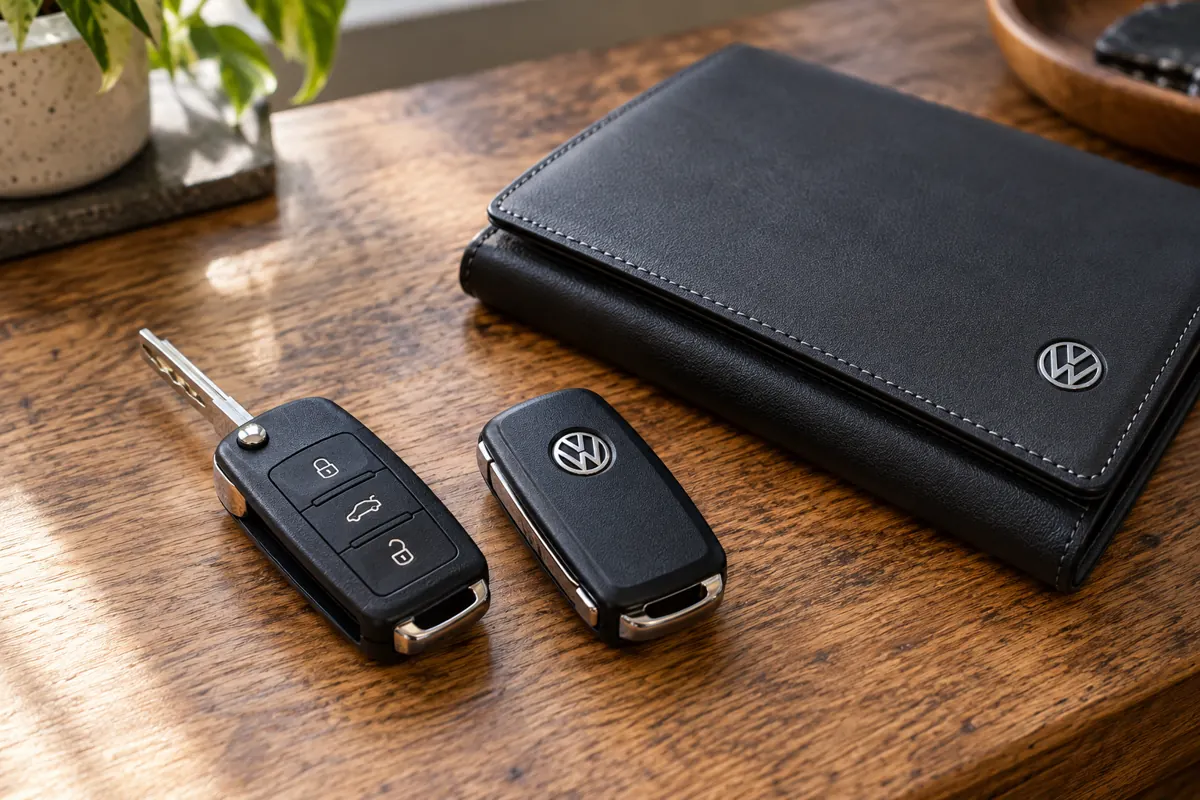
If one key works and the other does not, the difference points towards the affected key as a useful area to investigate. It is not a diagnosis of a particular internal component. If both behave alike, the vehicle battery, receiver, locks or local conditions may also need consideration. Tell the provider exactly which tests you completed rather than declaring the immobiliser faulty.
A Volkswagen key fob problem may be intermittent. If the affected key works during a later attempt, record that improvement without assuming the fault is fixed. Keep the working spare accessible for essential journeys if appropriate, and arrange assessment before relying on a key that has already left you unable to lock or start the car.
Check 3: use the correct VW key fob battery guidance
Find the instructions for your particular vehicle through Volkswagen’s official owner manual service. The VIN helps identify the correct documentation; older cars may need retailer assistance to obtain the right manual. Check the fob illustration as well as the model name because a different key design may use a different opening method.
Work on a clean surface with enough light to see small parts. Confirm the battery marking, polarity and approved opening point before proceeding. Do not use a larger cell, stack batteries or bend the contacts to make an unsuitable battery fit. Keep loose coin cells away from children and animals, and take used cells to an appropriate collection point.
If the VW key fob is not working after a battery change, recheck the specification and orientation against the instructions. An apparently new cell can also be unsuitable or poorly seated. Stop if a contact is broken, the case will not close or the board has moved. Those observations need attention; repeated battery swaps will not repair physical damage.
Check 4: distinguish synchronisation from a new key
The Volkswagen owners’ FAQs advise retailer battery replacement because a remote may need synchronisation afterwards. That does not mean every battery change erases the immobiliser programming. Follow the exact handbook route for restoring an existing remote, and ask for help if the procedure or result is unclear.
Be cautious with instructions described as a universal Volkswagen reset. The right sequence may depend on the year, key design and equipment fitted. A procedure for a different Golf generation or an overseas model is not proof that it applies to yours. Do not disconnect the vehicle battery or remove fuses simply because an online comment suggests it.
If a new Volkswagen fob is required, compatibility and authorisation must be confirmed separately. A replacement case can restore a damaged shell while retaining suitable original components, but an empty shell cannot replace missing electronics. A used fob that looks identical is not automatically reusable. Ask the intended provider before buying parts or dismantling your only working key.
Check 5: record where the VW remote fault happens
A remote that works at home but not in one particular car park gives different information from a remote that fails everywhere. If you can safely observe a pattern during ordinary use, note it. Do not drive an unreliable vehicle solely to test a theory or leave it unsecured while experimenting. A location pattern is evidence for diagnosis, not confirmation of radio interference.
Keep the fob separate from other keys and electronic devices during a safe comparison. Note whether the fault changes when you use the handbook’s specified detection position. Do not wrap the key in improvised materials or attach devices to the car. The aim is to give the provider clear observations without introducing additional variables or causing a second problem.
For a VW key fob not working intermittently, a brief record can include the affected function, which key was used and whether the engine started. A photograph of the dashboard message may help when taken safely while parked. Avoid posting identifying documents, security codes or pictures of a cut key blade publicly when asking for advice.
Check 6: inspect damage and wider vehicle symptoms
Look at the outside of the fob for a split case, sticking button, loose blade or signs of water entry. Do not pull the board out to look for a fault unless you have appropriate expertise. If the key became wet, explain the exposure and ask for advice before using it. Avoid strong heat, ovens, microwaves or attempts to charge a non-rechargeable coin cell.
Also record whether the car has weak interior lights, other electrical warnings or trouble operating the locks with either key. These details may point to a wider electrical issue that a fob battery cannot solve. If the dashboard behaves abnormally or the car will not start, ask the provider whether vehicle diagnosis or breakdown assistance is the appropriate next step.
Mechanical resistance is another separate symptom. Do not force a blade that will not turn in the door or ignition. A damaged blade or lock needs assessment, even if the remote is also unreliable. Describe both symptoms when booking so the provider does not arrive expecting a straightforward remote battery job.
Check 7: choose diagnosis, repair or replacement
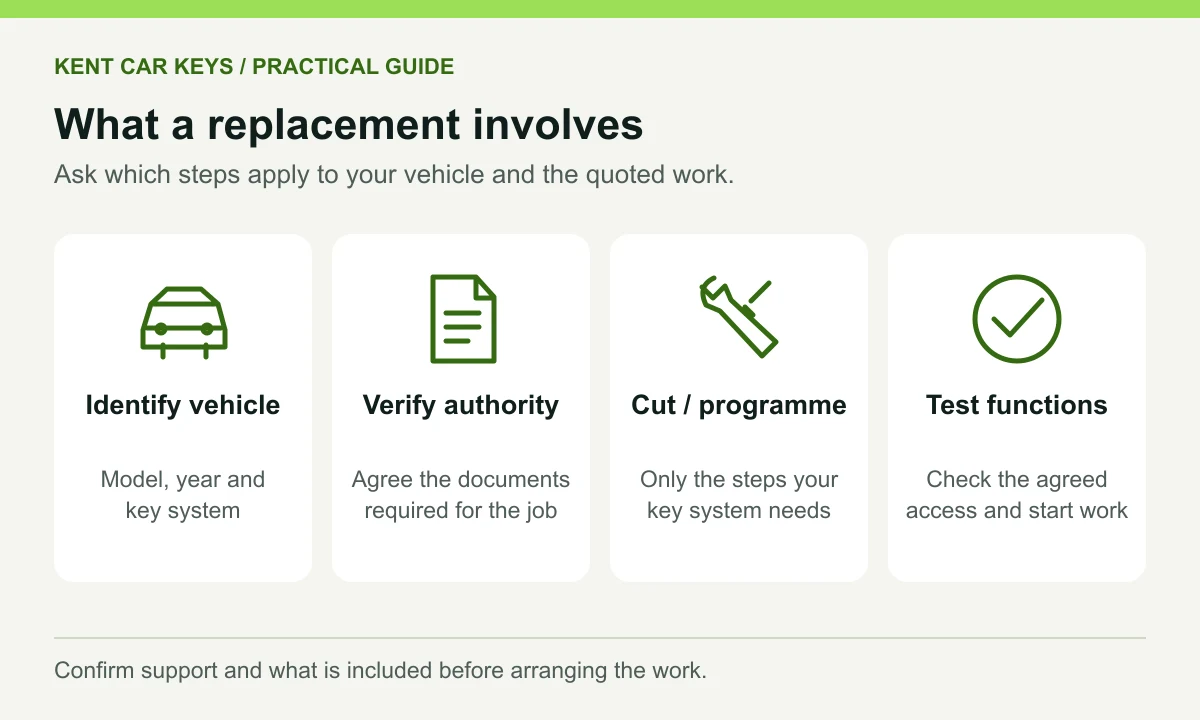
A VW key fob not working after the relevant checks needs a supported next step. A retailer can advise on its manufacturer route, while an auto locksmith can confirm whether it supports your exact Volkswagen and fault. Ask what diagnosis is included, whether the vehicle must be present and whether the work can be carried out where it is parked.
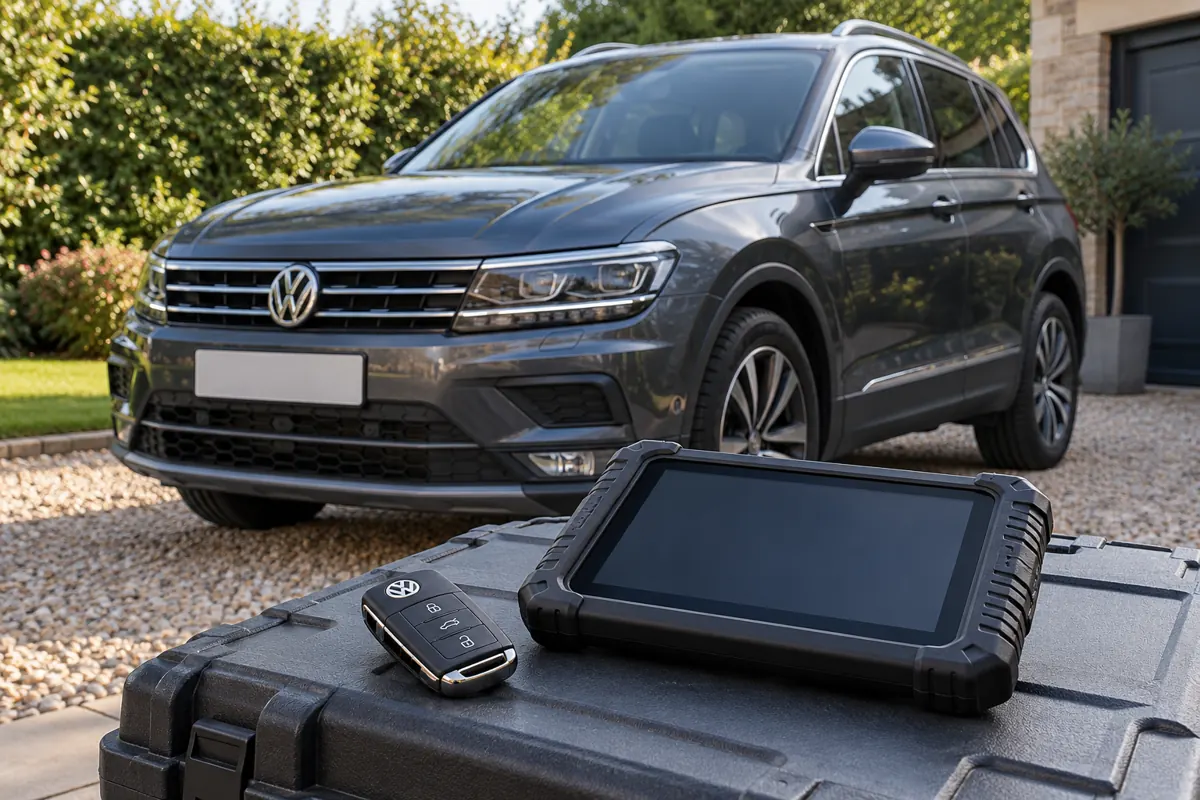
A useful quote distinguishes a battery or case repair from a complete key and any programming. Ask about attendance, parts, testing and VAT where applicable. Confirm what happens if the fault turns out to be on the vehicle. Avoid accepting a promise that every warning will disappear simply because a new key is supplied.
Before the job is finished, test the agreed functions on the repaired or replacement Volkswagen key and any retained spare. Check locking, unlocking and starting separately. Keep the invoice and relevant warranty details. If a function still fails, ask for an explanation and the proposed next step before relying on the car for an essential journey.
Get help for a VW key fob not working in Kent
Use our car key and fob repair information when a key is present but unreliable. For vehicle-specific enquiries, see Volkswagen key replacement support. Tell Kent Car Keys the model, year, location, whether the spare works and which function fails. Ask for availability and compatibility to be confirmed before booking.
If no key can be found, the lost Volkswagen car keys guide covers a different replacement route. If your Tiguan displays a detection warning, our VW Tiguan key not detected guide explains the observations to gather. Keep the key system and model in mind rather than transferring a procedure between vehicles.
The practical goal is a working, supported solution for the actual fault. A fresh remote battery, synchronisation, component repair and immobiliser programming are different jobs. Keep a record of what has been checked, preserve useful parts and ask for a clear explanation when the next step is uncertain.
Prepare a clear fault record
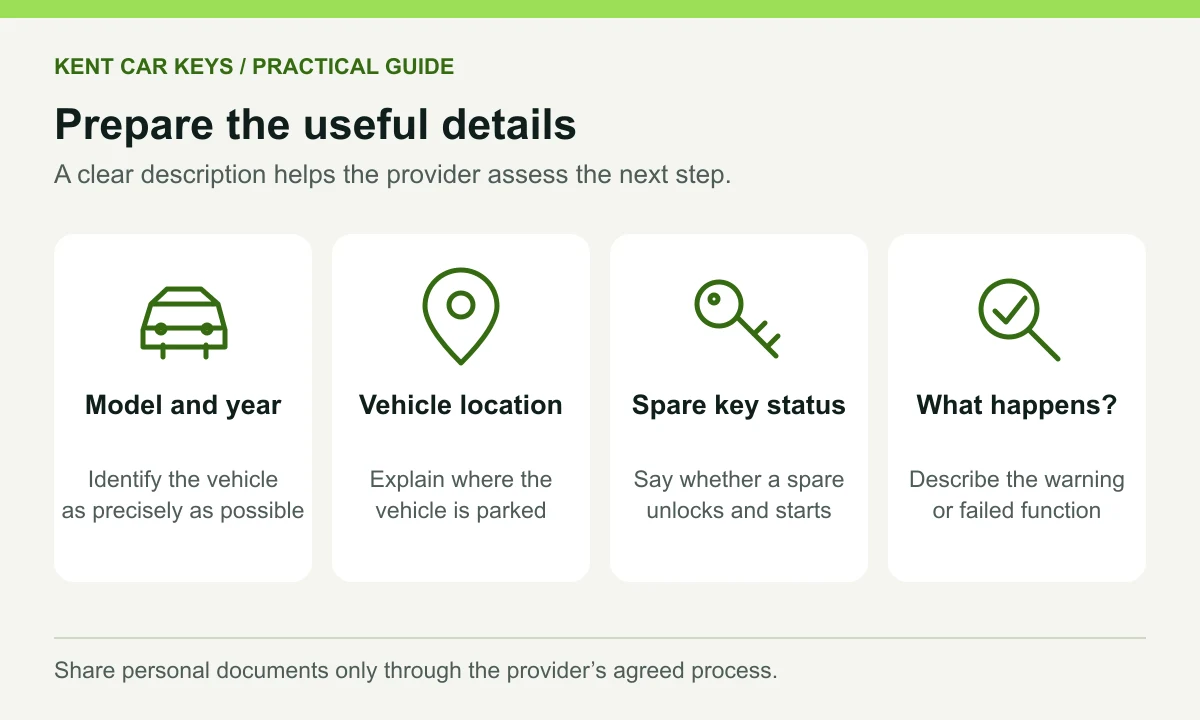
Before your appointment, gather every surviving key and note which one is affected. Bring any previous replacement invoice if you have it, and explain whether the fault began before or after earlier work. Tell the provider if a key has been dropped, submerged or transferred into another case. These details help avoid repeating checks and make it easier to distinguish an existing fault from an unrelated change. Keep security information private and share it only through the chosen provider’s appropriate process.