

This Ford car key replacement guide starts with one decision: is the key missing, damaged or present but unreliable? If all keys are lost, tell the provider before booking so access and electronic authorisation can be considered. If a key is available, describe exactly what it does. A battery or case repair may suit some faults, while a complete replacement needs compatible parts and appropriate testing.
For a Ford in Kent, gather the model, year, registration, location and number of working keys. Compare a dealer with an auto locksmith who confirms support for the exact vehicle. Ask what the quote includes and whether the car needs to move. The seven steps below explain the process without assuming every Ford uses the same key system or replacement method.

1. Establish what has happened to your Ford key
A lost key, a key locked inside the car and a faulty remote are different enquiries. If the key may be inside, ask about vehicle entry rather than ordering a replacement immediately. If a working spare can be brought to you, that may change the practical plan. Make one organised search and check with the people or venues involved before treating every set as permanently lost.
If the key is present, identify the affected function. Does it fail to lock remotely, resist turning in a mechanical lock or produce a dashboard warning while starting? Keep those observations separate. Ford key replacement should address an established need; replacing a fob is not a promise to repair an unrelated vehicle battery, receiver or lock fault.
Safety comes first if the vehicle is in a hazardous position. Follow roadside guidance and contact the appropriate assistance service rather than standing in traffic to search for a key. If someone is trapped and at immediate risk, contact the emergency services. A routine quotation is not the right response to a risk to life.
2. Identify the Ford and the type of replacement key
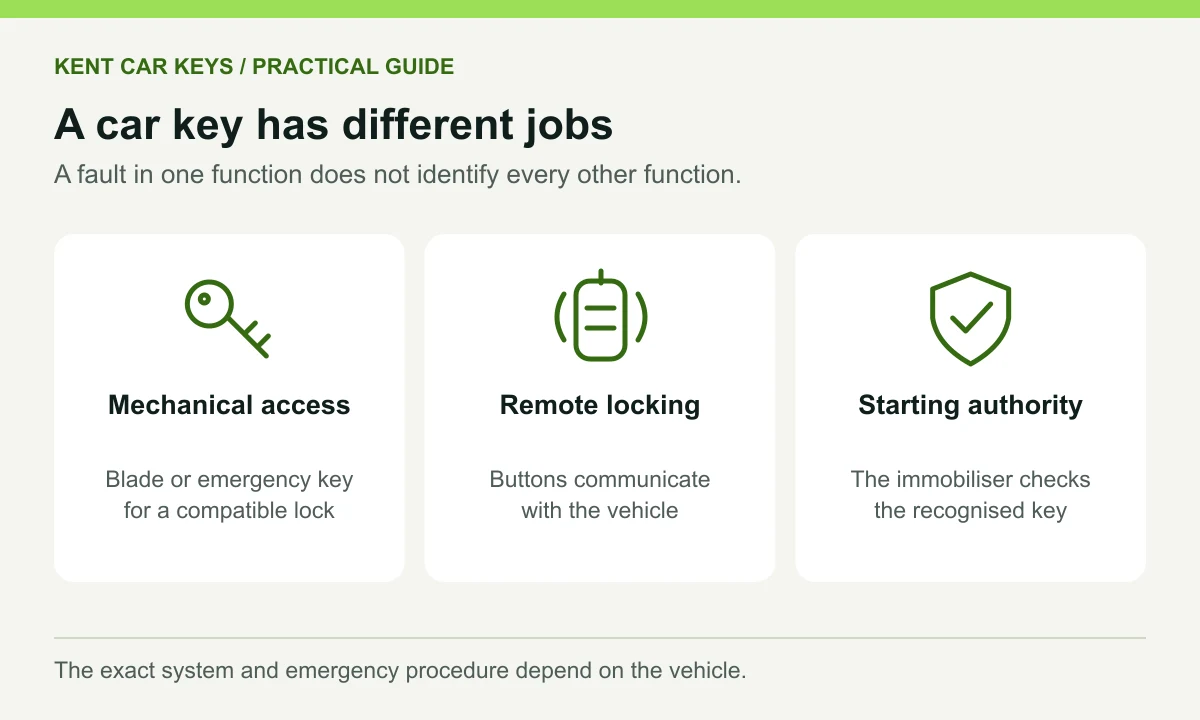
The badge and model name are a starting point, not the complete specification. Ford models can use different systems across years and equipment levels. Tell the provider whether the car uses a physical ignition key or a start button, and describe the original remote. A photograph or part number may help through an appropriate private channel, but avoid publishing security information publicly.
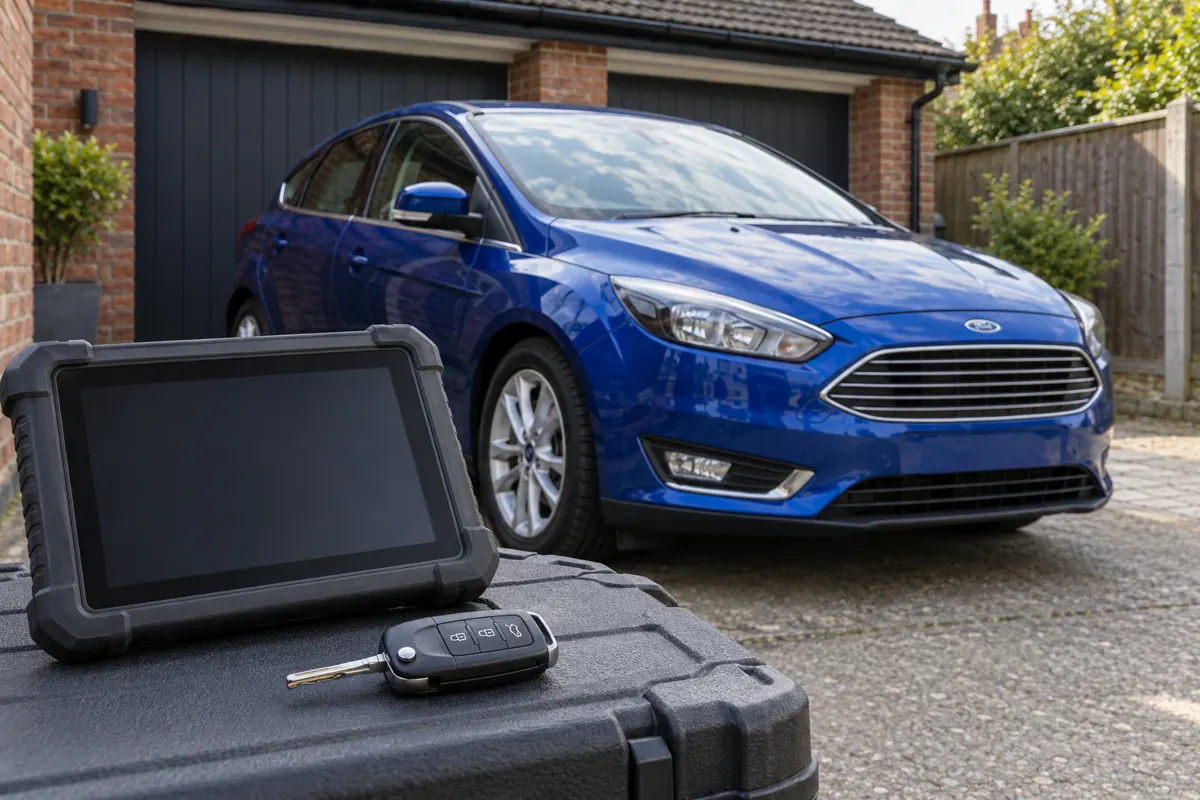
A key can combine a mechanical blade, transponder and remote buttons. The blade operates a lock where provided; the electronic part may be needed for starting; the remote has its own functions. A shell advertised online may contain none of those working components. Confirm what is being supplied before comparing its price with a complete replacement Ford key.
A used or similar-looking fob is not automatically compatible. Ask the person who will do the work before buying parts yourself. Some providers may not accept customer-supplied parts, and a programming fee cannot guarantee that an unsuitable key can be used. Give the exact Ford details and ask for the supported product and functions to be confirmed.
For vehicle-specific owner instructions, use Ford’s official owner manual service. Check the correct model documentation rather than following a reset video for a different production generation or market. This Ford car key replacement guide explains decisions; the handbook remains the reference for owner procedures.
3. Gather identification and authority to request a Ford key
Expect the provider to check that you are entitled to request a replacement. Ask for its document requirements before travelling or arranging attendance. Have identification and relevant vehicle paperwork available. The process may differ for a privately owned, company, leased or recently purchased vehicle, so explain the arrangement rather than assuming the registered name tells the whole story.
A V5C records the registered keeper and should not be treated as the sole proof of ownership. A provider may ask for additional purchase, finance or authorisation documents. If papers are locked inside the vehicle or the log book has not arrived, explain this at the enquiry stage and ask how verification can be completed.
Ford’s official replacement-key advice describes the dealer route and its identity and vehicle-document checks. It also explains that recovery may be required in some circumstances. Confirm the details with the chosen provider; do not arrange towing merely because another owner’s car needed it.
Keep key codes, identity documents and vehicle-security details private. Use the provider’s appropriate process for any information it needs. A public social-media comment is not the place to share a photograph of a key blade, a security label or your full documents. A careful verification process protects the vehicle as well as the person arranging the work.
4. Compare Ford key replacement routes on equal terms
A Ford dealer can explain the manufacturer route for parts, ordering and appointments. An auto locksmith can explain whether it supports the particular Ford and whether it can attend where the vehicle is parked. Ask both to quote for the same circumstances, including whether any working key remains. Do not compare a spare-key price with a complete all-keys-lost job.
If all keys are missing, ask about entry, blade cutting where relevant, the electronic key and programming. If the original is damaged, ask whether a repair is supported and what parts will be retained. A complete quotation should make the intended result clear. Be cautious if a provider promises universal support without checking the vehicle details.
Convenience depends on the car and location. Mobile attendance may be possible for a supported job, but access, parts and vehicle condition can affect it. A dealer appointment may need transport, but that should be confirmed rather than assumed. Ask about appointment availability separately from the time expected to carry out the actual work.
For the local service enquiry, use our Ford key replacement information. Tell Kent Car Keys where the car is parked and what happened to the key. Ask for support, coverage and availability to be confirmed for that specific job before making transport or work arrangements around it.
5. Understand cutting, repair and Ford key programming
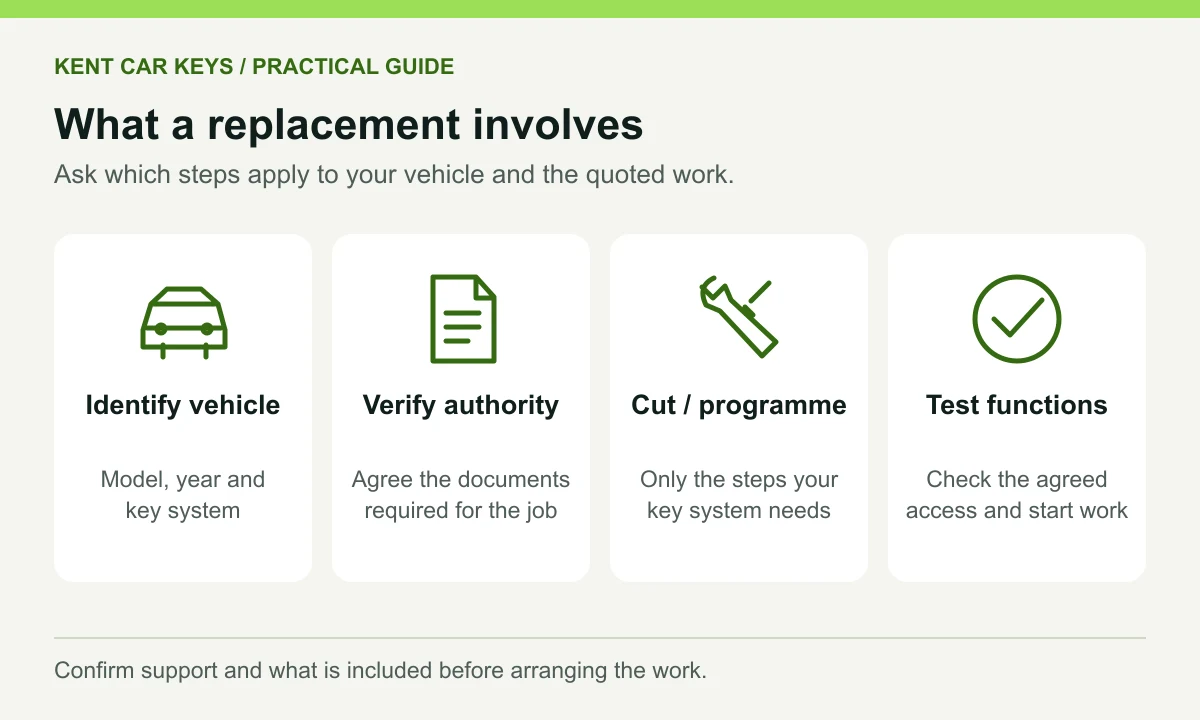
Cutting and electronic authorisation are different parts of a replacement. A blade that opens a door may not start an immobiliser-equipped vehicle. Remote locking can also behave differently from starting. Ask for every agreed function to be included in the quotation and tested afterwards, rather than judging a replacement by only one successful button press.
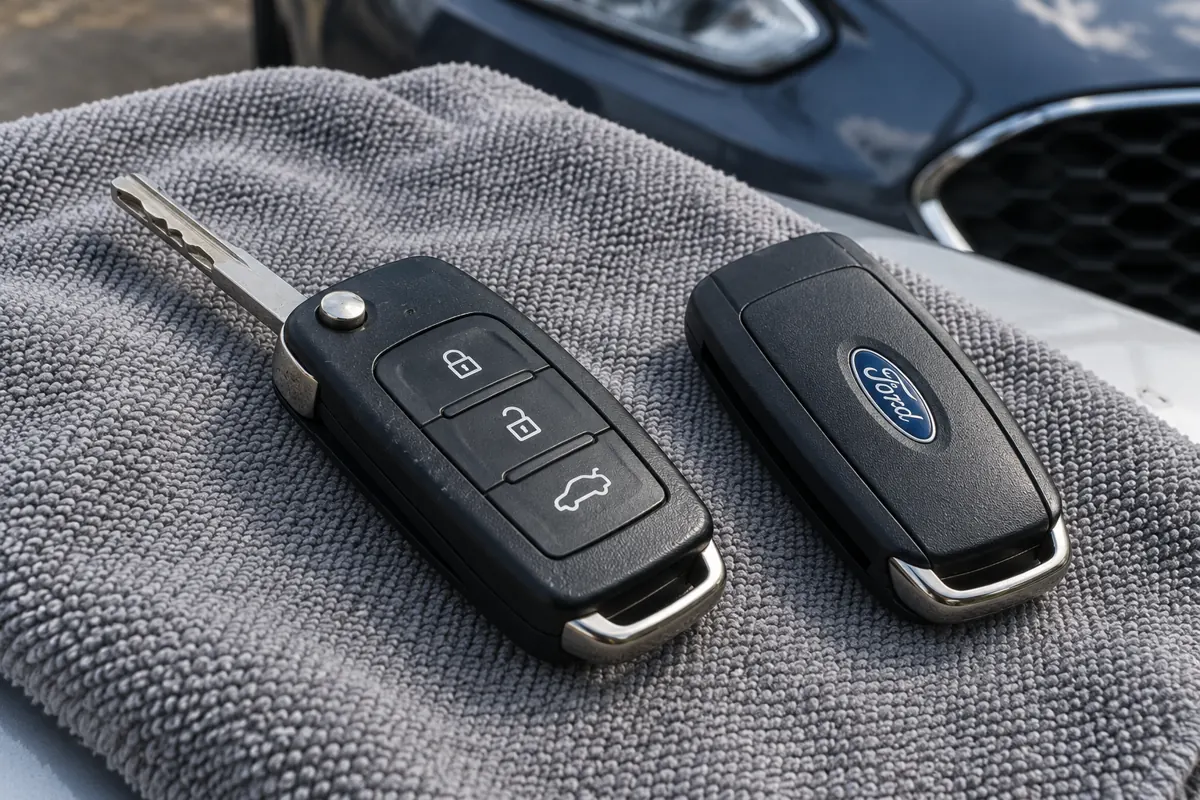
A remote battery change is not the same as Ford key programming. Follow the handbook for the specified cell and method, or ask for help if the case is damaged or difficult to open. A new battery may help a remote fault but cannot promise to resolve all starting warnings. Tell the provider what has already been tried.
A case repair may retain suitable existing components. A new electronic key may need vehicle-specific preparation and authorisation. If the original has been lost, ask what happens to its electronic status and whether other keys must be present. Do not assume that adding a new key automatically deals with every security concern from the missing one.
Our Ford car key programming guide explains those distinctions in more detail. If a key remains but is unreliable, start with a clear description of the fault. An assessment can help avoid paying for a complete replacement when another supported repair is more appropriate.
6. Agree the cost and practical arrangements
There is no single price that covers every Ford key replacement. The vehicle, key specification, available originals, access and required work all matter. Ask for a written quote for your actual situation. Confirm whether attendance, diagnosis, parts, cutting, programming, testing and VAT where applicable are included. Clarify what could lead to a revised quotation.
If the provider discovers a vehicle fault, agree that further work will be explained and authorised before it starts. A missing key can coexist with a flat vehicle battery or a mechanical problem. A quote for key replacement should not become an open-ended agreement to repair unrelated faults without your understanding and consent.
Tell the provider about the parking environment. A gated site, underground car park, restricted height, private access arrangements or limited working space can affect attendance. If the car has not been used for a long period, say so. Give an accurate location privately to the provider you choose and confirm who needs to be present with documents.
Ask what happens if parts need to be ordered or the job cannot be completed as first expected. Distinguish a confirmed appointment from an estimated completion time. Keep a record of the agreement and arrange essential travel using confirmed information. Unsupported promises about an immediate fix are not a substitute for a supported plan.
7. Test every agreed function before finishing
Check the replacement Ford key with the provider. Test mechanical operation where applicable, remote locking and unlocking, starting and any supported keyless functions. Keep other keys away during the comparison so the vehicle is detecting the intended key. Ask for any warning that remains to be explained before relying on the car for an essential journey.
Test retained keys too. If a programming routine affects existing keys, you need to know that each intended spare still works. If the old Ford key is found later, ask before treating it as a usable backup. Its electronic authorisation may have changed even if its blade still operates the door lock.
Keep the invoice, the description of the parts supplied and any warranty terms. Ask which contact to use if the fault returns and whether any follow-up is included. A tested result and a clear record are especially useful when the original symptom was intermittent or there has been earlier repair work on the same key.
Consider a Ford spare key after the immediate problem
Once the replacement works reliably, decide whether a separate spare suits your household. A Ford spare key gives you another option if the main set is misplaced, but it should be tested and stored separately. Carrying both sets on one ring means the same loss removes the backup. Keep a record of who holds it and how it can be accessed.
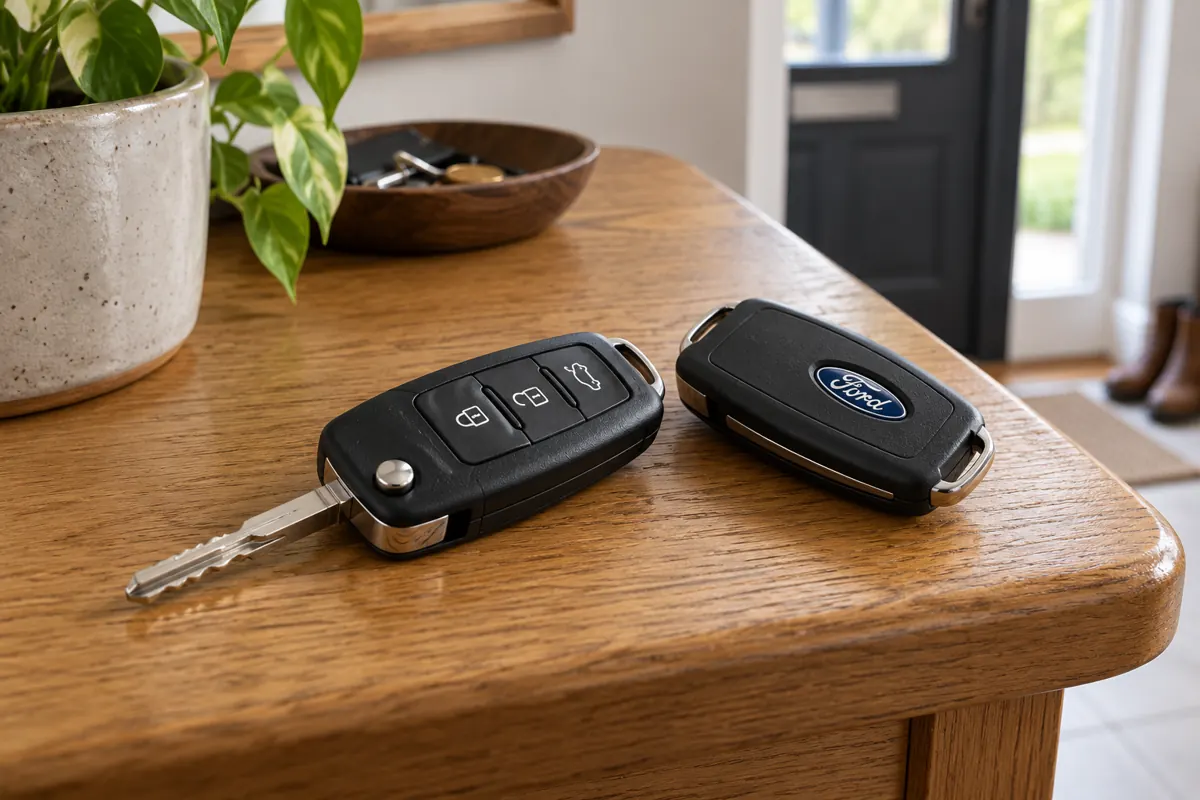
Our spare car key information explains what to provide for a spare-key enquiry. Confirm the supported functions: a starting spare and a full remote may meet different needs. Do not assume every Ford has an owner-programming option or that every spare is equivalent because the casing looks the same.
For keyless vehicles, use the handbook and police vehicle-security advice for appropriate storage and precautions. Check the car is locked and keep documents and identifying information secure. A tracker, pouch or other accessory does not replace those everyday checks or remove every theft risk.
Apply the Ford car key replacement guide to a spare-key enquiry
Consider an owner with a working Ford key who wants a separate backup. The useful enquiry states that the current key starts the car, describes the ignition or start-button arrangement and asks which spare is supported. It also asks whether the existing key must be present and which functions the new key will provide.
This is different from asking for a replacement because every key has disappeared. A provider can quote accurately only when the available originals and intended result are clear. If the owner wants a full remote, that should be stated; if a basic starting spare is offered, its practical limitations should be explained before the product is chosen.
This example is illustrative, not a report of a completed client job. It shows how the same Ford key replacement service category can contain different jobs. Keep the actual circumstances beside the quote rather than relying on a figure shown for another vehicle or a different type of spare.
Apply the guide when a Ford key is lost away from home
An owner returning to a parked Ford with no working key needs a different practical plan. First establish whether the keys are truly missing or could be recovered from a venue or another person. If no spare is available, tell the provider that the vehicle is locked and give the parking location, model and year.
The enquiry should ask whether entry and all-keys-lost work are supported at that location. A height-limited car park or controlled site may affect attendance or recovery. The provider needs those details before confirming the visit. An estimate for making a Ford key is not useful if the vehicle cannot be accessed as expected.
Keep the car’s security in mind during the wait. If the missing set may have been taken, explain that concern and ask about the appropriate response. Do not leave documents or valuables exposed, and avoid giving identifying details to unknown people offering help. Use a supported provider and a clear private arrangement.
A recently purchased Ford may need a different enquiry
If you have just bought the car, test every supplied key rather than assuming each is a working spare. Check starting and remote functions separately. Keep the sales paperwork and any earlier key invoices available, and tell the provider if the registration documents are still being updated. Verification requirements should be discussed before attendance.
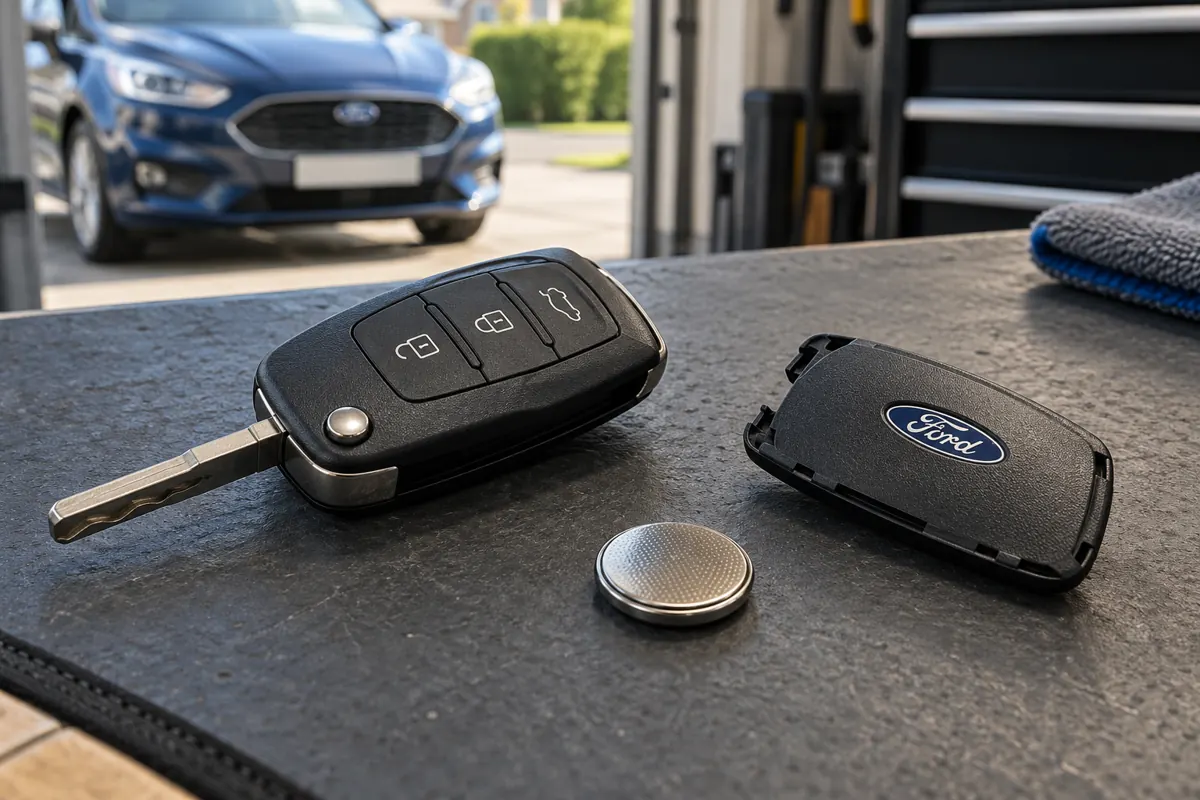
A previous owner may have changed the case, locks or security equipment. Do not assume an extra remote or tag is a Ford spare key. Ask what it operates, and record anything that is not understood. These details can help the provider identify the actual vehicle setup before proposing Ford key replacement.
If a promised second key has not arrived, keep that purchase issue separate from the service quotation. Ask for a supported replacement route based on the keys and documents you actually hold. Avoid buying a used fob merely because its case resembles the one supplied with the car.
Keep a useful record after Ford key replacement
Write down how many working keys you hold after testing and which functions each one provides. Keep this note with the invoice, parts information and warranty terms. It helps another driver use the backup appropriately and gives you a clear record for a later service enquiry, sale or vehicle return.
Record any unresolved warning or separate fault honestly. A successful replacement Ford key does not establish that every other vehicle system has been inspected. If further diagnosis is recommended, ask what it concerns and who should carry it out. Keeping the scope clear prevents a completed key job from being mistaken for a general vehicle health check.
Before booking, ask how you will receive confirmation and whom to contact if access or circumstances change. Keep the agreed appointment details with your paperwork. If the vehicle moves or another key is found, tell the provider promptly so it can check whether the original plan still applies to your Ford key replacement enquiry.
Use the Ford car key replacement guide to make a focused enquiry
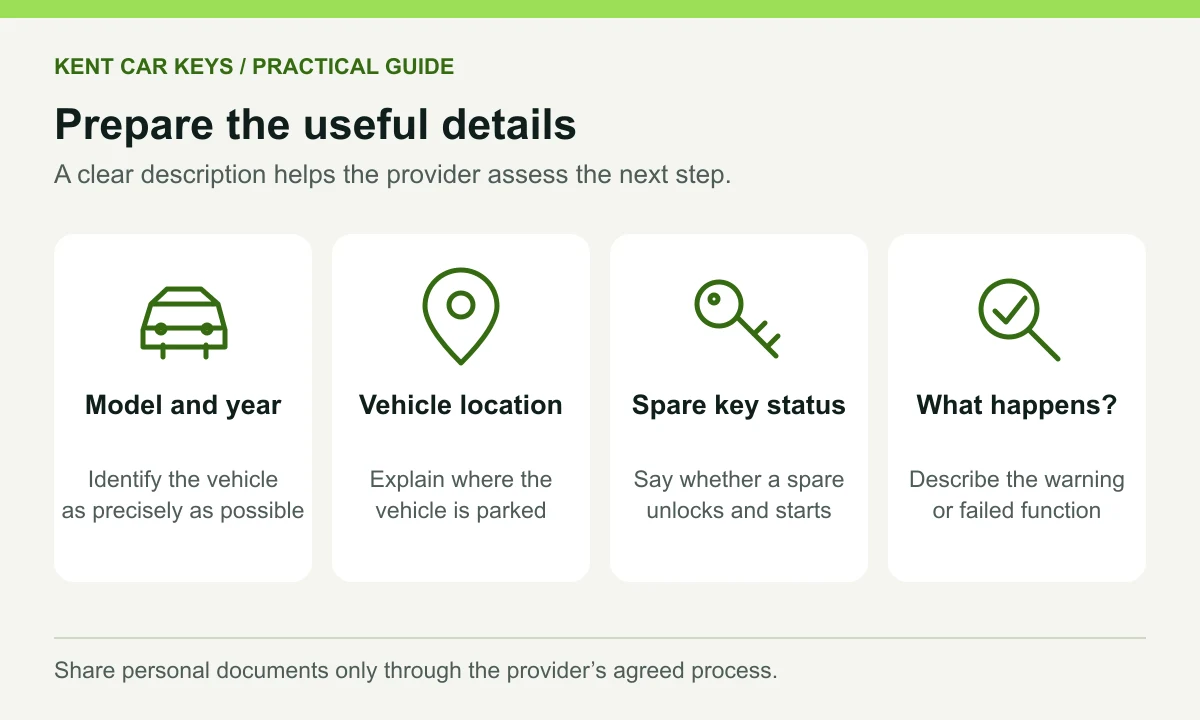
A useful message is brief and factual: the Ford model and year, location, whether the car is locked, how many keys remain and which functions fail. Add any warning message or physical damage. State whether you want a repair, a spare or an all-keys-lost replacement, while remaining open to assessment if the fault is uncertain.
The right next step is the route that supports your specific vehicle with a clear scope, confirmed arrangements and a tested key. Preserve useful original parts, avoid unnecessary dismantling and ask for explanations when something is unclear. This Ford car key replacement guide is designed to make those conversations easier, without promising one process or outcome for every car.
If no working key remains, our guide to car keys without the original explains which details a locksmith needs to check the available options.